Choosing the right manufacturer matters when a front door must combine security, elegance, and long-term performance. In 2026, a Luxury Aluminum Entry Door is more than a polished entrance. It is a daily contact point, exposed to rain, sunlight, fingerprints, temperature changes, and repeated use.
This guide examines leading luxury aluminum entry door manufacturers through practical criteria. These include alloy quality, thermal-break design, surface finishing, hardware reliability, customization, installation support, and warranty clarity. Experienced manufacturers should explain their testing methods, material specifications, and maintenance requirements without hiding behind impressive photographs. Look for doors with stable frames, precise corner joints, dependable multipoint locks, and finishes that remain consistent across large panels.
Details reveal quality.
A well-made door should open smoothly, close firmly, and resist movement after seasonal changes. Yet no manufacturer is perfect. Some offer exceptional design flexibility but limited regional service. Others provide strong warranties but fewer custom finishes. This guide considers those compromises instead of presenting a simple popularity list. It also encourages buyers to verify local building requirements, installer qualifications, and published performance data before ordering.
The manufacturers discussed here are assessed from a buyer’s perspective, supported by industry practices and observable product details. Still, product lines change, and showroom results may differ from installation reality. Careful comparison remains essential. A beautiful bronze finish cannot compensate for poor drainage, weak hardware, or an inaccurate frame measurement. The best choice will depend on climate, architecture, budget, security expectations, and the manufacturer’s ability to support the door after delivery.
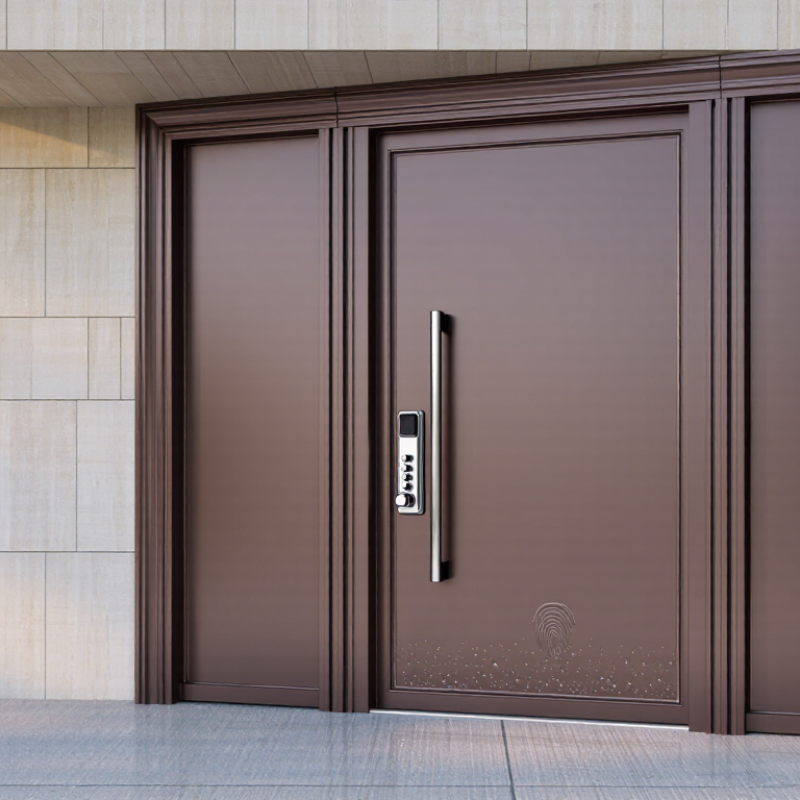
A luxury aluminum entry door manufacturer delivers measurable performance, not only a polished appearance. The International Energy Agency reports that buildings use about 30% of global final energy. Therefore, responsible manufacturers now treat thermal efficiency as a design feature. Look for insulated frames, continuous thermal breaks, tested weather seals, and published U-values. Precise corner joints matter too. A small gap can create drafts, noise, and water intrusion.
Independent testing separates premium engineering from expensive styling. Manufacturers should provide air, water, structural, and forced-entry performance results through recognized testing systems. Their production process should include CNC accuracy, controlled powder coating, and traceable material batches. The International Aluminium Institute states that recycled aluminum requires roughly 5% of the energy used for primary aluminum. That makes documented recycled content valuable, although it should not replace durability or responsible sourcing. In my experience, hardware alignment often reveals more than a showroom finish. Some luxury doors still feel ordinary after installation. That deserves honest review.
Tips: Ask for project-specific test reports, not general claims. Confirm the frame’s thermal-break design and glass specification. Inspect hinge adjustment, gasket compression, drainage paths, and finish samples under natural light. Request installation guidance and maintenance intervals. A reliable manufacturer explains limitations clearly. Perfect performance is unlikely, so question anyone promising it.
Choosing among the best luxury aluminum entry door manufacturers in 2026 requires more than attractive photographs. Start with the material specification. Premium aluminum should have consistent alloy quality, corrosion-resistant finishing, and stable thermal performance. Ask whether the frame includes thermal breaks, reinforced corners, and properly sealed drainage channels. Details matter. A heavy door is not automatically a strong door.
Engineering quality appears in the small movements. Open the door slowly and check whether the panel remains aligned without rubbing. Examine hinge capacity, locking-point accuracy, gasket compression, and threshold design. A reliable manufacturer should provide tested air, water, wind, and thermal performance data. Ask for factory drawings, finish samples, and installation tolerances. Vague answers are a warning sign. I have seen impressive showroom doors fail because installers ignored uneven openings.
Manufacturing quality depends on repeatable control, not skilled hands alone. Look for documented inspections, barcode tracking, coating thickness checks, and protected packaging. Request evidence of hardware testing and corner-joint strength. Factory-made doors can still contain defects. That deserves honesty. Also evaluate after-sales support, replacement-part availability, and the clarity of the warranty. A technically excellent door becomes frustrating when adjustment instructions are missing or service contacts disappear. Reliable suppliers explain limitations instead of promising perfection.
In 2026, a high-end aluminum entry door is defined by thoughtful customization, not decoration alone. The frame profile affects strength, sightlines, and the amount of daylight entering a hallway. Slim profiles create a refined appearance, but they may require tighter engineering and careful installation. That trade-off deserves honest discussion.
Finish selection changes both character and maintenance. Textured powder coatings can imitate bronze, charcoal, or warm metallic tones without constant refinishing. Coastal or high-sun locations need coatings tested for moisture, ultraviolet exposure, and color stability. I prefer reviewing physical samples near the building exterior. Screens can mislead.
Glass customization also shapes the entrance. Low-emissivity insulated glass improves comfort, while reeded or translucent glass adds privacy without making the doorway feel closed. Oversized panels need suitable hinges, reinforced frames, and accurate structural calculations. Hardware completes the experience. A long pull handle, concealed closer, or smart locking system should match the door’s weight and daily use.
Threshold height, drainage, weather seals, and thermal breaks are less glamorous but equally important. A door can look exceptional and still admit drafts if these details are neglected. Custom dimensions must follow verified site measurements, not assumptions from a preliminary drawing. Even experienced teams can miss uneven floors or unexpected masonry. That is where careful review matters.
High-end aluminum entry doors should be compared through tested performance, not showroom weight or decorative hardware. Security begins with the frame, hinges, cylinder, and strike reinforcement. ANSI/BHMA testing evaluates lock strength, cycling, and operational durability. A credible manufacturer should provide test evidence for the complete door assembly, not only the lock. Multi-point locking can improve resistance, but poor installation may still create a vulnerable gap.
Energy performance deserves equal attention. The U.S. Department of Energy estimates that windows account for 25–30% of residential heating and cooling energy use. An insulated aluminum door can reduce heat transfer through thermal breaks, insulated cores, and low-emissivity glazing. NFRC labels report U-factor and solar heat gain coefficient; lower U-factor generally indicates better insulation. Glass changes the equation. A large glazed panel may increase daylight, yet it can weaken thermal results without carefully selected coatings and spacers. Manufacturers should disclose whole-door values, not center-panel figures alone.
Durability depends on climate and maintenance. AAMA 2605 performance requirements address high-quality organic coatings, including color retention and resistance to weathering. Coastal projects need stronger evidence against salt exposure, while freezing regions need repeated air and water infiltration testing. The FBI’s 2023 Crime Data Explorer shows burglary remains a practical security concern, but national crime data cannot prove one door design is safer. That distinction matters. A weakness in this comparison is installation: even a heavily tested door can leak, bind, or fail when the opening is poorly prepared. Look for independent laboratory reports, documented field experience, and clear warranty exclusions.
Luxury aluminum entry doors should be judged by evidence, not showroom drama. Ask each manufacturer for independently verified U-factor, air-leakage, water-penetration, and structural-pressure results. These figures should identify the tested size, glass type, frame configuration, and installation method. A beautiful sample proves little.
The U.S. Department of Energy estimates that windows can cause 25–30% of residential heating and cooling energy use. Doors are not windows, but poorly sealed openings still affect comfort. The U.S. Energy Information Administration’s 2020 Residential Energy Consumption Survey reports that space heating uses about 42% of household energy. Thermal breaks, insulated cores, continuous weather seals, and correct installation therefore deserve careful attention. Ask whether performance data follows recognized NAFS and NFRC procedures.
I would also check the factory’s powder-coating process, salt-spray testing, drainage design, hinge load rating, and replacement-part policy. Request a written warranty with exclusions in plain language. Confirm who handles site measurement and adjustment after delivery. Lead times matter too. A door delayed during renovation can leave a temporary opening exposed for weeks.
Do not accept vague claims such as “premium grade.” Request laboratory reports, project references, and maintenance instructions. Speak with a recent buyer, not only a salesperson. I have seen polished brochures hide weak after-sales support. That is easy to miss. Buyers should also inspect a full-size corner sample, because small displays rarely reveal frame movement, gasket compression, or the hard closing feel of a heavy door.
Reliable manufacturers show measured performance, not only attractive showroom designs. They provide thermal, air, water, and structural test results. Their limitations are clear. No door is perfect.
Thermal breaks reduce heat transfer through the metal frame. Insulated cores and continuous seals improve indoor comfort. Poor details can still create drafts.
Request reports for air leakage, water penetration, structural pressure, and thermal performance. Confirm the tested size, glass type, frame design, and installation method.
Frame profiles influence strength, daylight, and visual proportions. Slim profiles look refined but need accurate engineering. Custom dimensions must follow verified site measurements.
Low-emissivity insulated glass can support better indoor comfort. Reeded or translucent glass adds privacy. Large panels need stronger hinges and reinforced frames.
Textured powder coatings can resemble bronze, charcoal, or warm metal. Coastal and sunny locations need moisture, ultraviolet, and color-stability testing.
Check threshold height, drainage paths, gasket compression, hinge alignment, and weather seals. Uneven floors can cause unexpected problems. Small gaps matter.
Ask about written warranty exclusions, replacement parts, maintenance intervals, and adjustment services. Confirm who handles site measurement. A polished brochure proves little.
Choosing the best Luxury Aluminum Entry Door manufacturer in 2026 requires more than comparing appearance and price. A truly premium manufacturer combines high-grade aluminum alloys, precise engineering, advanced thermal breaks, durable surface treatments, and carefully controlled production standards. Buyers should evaluate frame strength, hardware quality, weather resistance, insulation performance, and the manufacturer’s ability to maintain consistent craftsmanship. Customization is also important, including dimensions, finishes, glass types, panel designs, opening configurations, smart access systems, and hardware options that complement the building’s architecture.
Security, energy efficiency, and long-term durability should guide the final decision. A high-end door should provide reliable locking performance, strong resistance to wind and moisture, stable operation, and effective indoor temperature control. Before placing an order, buyers should review technical specifications, testing information, warranty terms, installation support, maintenance requirements, lead times, and the manufacturer’s experience with custom projects. The right choice balances refined design, dependable performance, personalization, and lasting value.