Choosing a Modern Aluminum Entry Door involves more than selecting a stylish surface. It affects security, energy efficiency, weather resistance, and daily comfort. A well-designed door should open smoothly, seal tightly, and remain stable through changing seasons. Look closely at the frame, thermal break, hardware, glass, hinges, and locking system. These details often matter more than a dramatic showroom finish.
Experience reveals small differences. A powder-coated surface can resist fading, but poor installation may still cause drafts. A narrow frame can create a clean appearance, yet it may reduce insulation if the construction is weak. Check the door’s measurements, wall condition, threshold height, and drainage path before ordering. Ask manufacturers for performance data and clear warranty terms. Professional installation also deserves careful attention, especially around flashing and perimeter seals. Local building requirements should guide the final choice.
Do not judge the door by appearance alone. Test the handle, inspect the corners, and notice whether the panel feels balanced. Consider your climate, entrance direction, household traffic, and maintenance habits. A dark finish may look impressive, but it can show dust and heat more clearly. The perfect option may not exist. However, a thoughtful comparison can prevent expensive regrets and create a safer, quieter entrance for years.
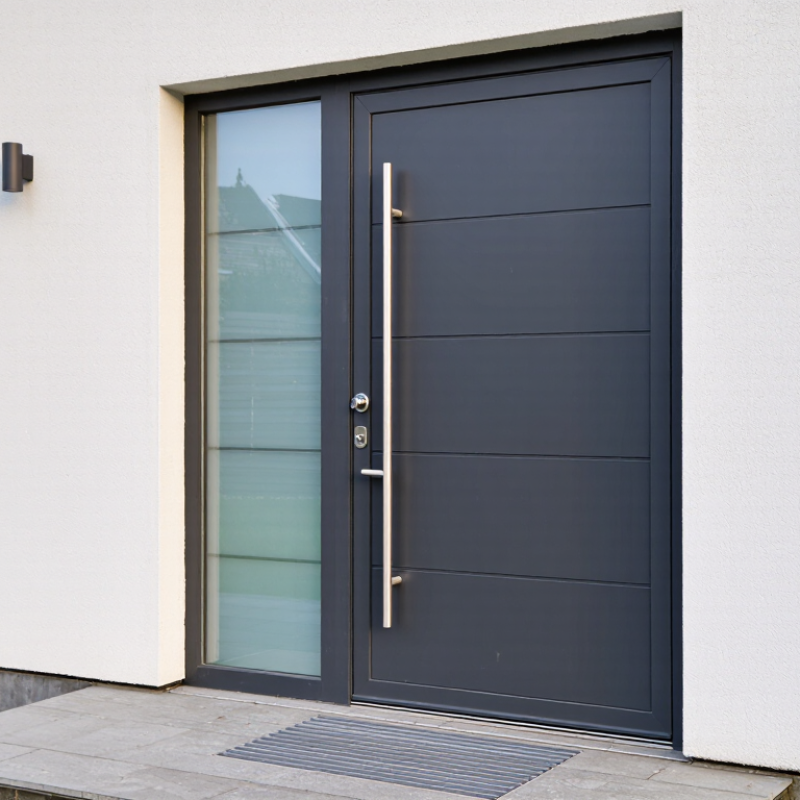
Choosing a modern aluminum entry door starts with clear requirements, not attractive photos. Measure the opening, wall thickness, swing direction, and available clearance. Note daily traffic, family needs, pets, deliveries, and furniture movement. Write these down. Weather exposure matters too. A west-facing entrance may receive harsh afternoon sun, while a sheltered doorway may face driving rain. Look for thermally broken aluminum frames, suitable glazing, dependable seals, and a threshold designed for local conditions. Ask for tested air, water, and structural performance rather than relying on appearance. Confirm safety glazing, accessibility, fire separation, and installation rules with qualified professionals.
Design priorities should support those practical needs. Decide whether you prefer a wide glass panel, a solid lower section, or a balanced combination. Large glazing can brighten a hallway, but it may reduce privacy and increase solar heat. A slim frame looks refined. It can also demand more careful hardware alignment. Choose handles that feel secure with wet hands, and check whether the lock supports your required security level.
Finish samples should be viewed outdoors, because color changes under direct sunlight. I once favored a dramatic dark finish without considering dust and fingerprints. That decision needed more maintenance than expected. Request full-size drawings, review the threshold detail, and confirm who handles adjustments after installation. A beautiful door still fails its purpose if it drags, leaks, or feels difficult to operate.
Choosing a modern aluminum entry door means comparing type, material, and construction, not appearance alone. Hinged doors suit traditional entrances and usually seal well. Sliding doors save space but require precise track drainage. Pivot doors create a wider opening, although their hardware and air sealing can demand more care. A U.S. Department of Energy report notes that windows can represent 25–30% of household heating and cooling energy loss. Poorly sealed doors can worsen that weakness.
Aluminum offers slim frames, corrosion resistance, and consistent dimensions. Extruded aluminum is stronger than thin formed sheet, but strength alone is not enough. Look for thermally broken frames, insulated cores, and low-conductivity polyamide barriers. These features reduce heat transfer through the frame. Check the National Fenestration Rating Council label for U-factor and solar heat gain coefficient values. Lower U-factor generally indicates better insulation. Glass selection matters too. Triple glazing may improve comfort, but it adds weight, cost, and hardware stress. More is not always better.
Tips: Match the door type to daily traffic and available wall space. Ask for tested air, water, and structural performance. Review installation details, including sill pans, perimeter seals, and fastener spacing. A beautiful door can still fail through careless installation. One detail is often overlooked: oversized panels need stronger hinges and a perfectly supported frame. That can change the budget quickly. Source claims should be checked against current local conditions and the manufacturer’s test documentation.
Compare aluminum door types, materials, and construction methods through typical whole-door thermal performance. A lower U-factor indicates better insulation.
Representative whole-door U-factors are shown in W/m²·K. Non-thermally broken aluminum doors generally transfer heat quickly, while thermally broken frames reduce conduction through a polyamide separator. Adding insulated panels and low-emissivity double glazing can further improve thermal efficiency. Actual results vary with door size, glazing area, hardware, seals, and test standards.
Choosing a modern aluminum entry door starts with its energy performance, not only its appearance. Aluminum is strong, but its thermal performance depends on the frame design. Ask for a documented U-value and check whether the frame includes a continuous thermal break. Low-emissivity glass can reduce heat loss near the entrance.
On a cold morning, touch the interior frame. It should not feel noticeably colder than the surrounding wall.
I once focused too much on slim sightlines. That was a mistake.
Security requires more than a heavy-looking door. Look for a tested multipoint locking system, reinforced hinges, and laminated or impact-resistant glazing. The cylinder should resist common forms of forced manipulation. Ask for independent test reports instead of relying on showroom claims.
A secure lock can still fail if the frame is poorly anchored. Professional installation matters.
Measure the opening carefully, and confirm that fixings connect with solid structural material.
Weather resistance becomes obvious during heavy rain.
Inspect the compression seals around the panel and frame. They should meet evenly, without visible gaps or crushed corners. A raised, well-sealed threshold can limit water entry, but it must still allow safe daily access.
Check published air, water, and wind resistance results when available. Weather tests cannot predict every building condition.
Local exposure, drainage, and installation quality still influence performance. Even a high-quality door may underperform when the surrounding wall is damp or poorly detailed.
A modern aluminum entry door should fit your home’s architecture, not chase a short-lived trend. Choose slim panels and broad glass for contemporary façades. Use stronger visual divisions for traditional homes. A matte finish hides fingerprints better than high-gloss coatings. Dark colors look refined, but they can absorb intense sunlight. DOE Building America guidance emphasizes thermal breaks and careful air sealing around doors. Ask for both details before approving the design.
Hardware needs equal attention. A long pull handle creates a clean, accessible gesture. A lever feels more practical for frequent entry. Select corrosion-resistant hardware near coastal areas. Check the lockset, hinges, threshold, and weather seals as one system. Zonda’s 2024 Cost vs. Value Report estimated 188.1% cost recouped for steel door replacement. That figure is not an aluminum guarantee. It still shows how strongly entry doors can influence perceived value. Custom sizing, sidelites, concealed closers, and low-e glazing can improve fit and comfort, but each option adds cost and maintenance decisions.
Tips: Keep it proportionate. Request thermal-performance documentation, not vague claims. Compare U-factor, solar heat gain, air leakage, and visible transmittance. Inspect a full-size sample in daylight. Small finish chips can look surprisingly different indoors. I would also test the handle personally. A beautiful pull can feel awkward after twenty daily uses. Do not guess. Measure the rough opening twice, and let an experienced installer review drainage, shimming, and threshold height before fabrication.
How to Choose a Modern Aluminum Entry Door?
A modern aluminum entry door should fit the building, not just the opening. Measure the rough opening, wall depth, sill condition, and swing clearance before ordering. Installation errors often appear later as drafts, water marks, or difficult locking. The U.S. Department of Energy reports that air leakage can account for 5% to 30% of a home’s energy use. Proper flashing, an insulated sill pan, continuous weatherstripping, and a square frame deserve close attention.
Maintenance is usually manageable, but aluminum is not maintenance-free. Inspect gaskets, hinges, drainage paths, and fasteners each year. Coastal air may accelerate corrosion around cut edges and hardware. Clean surfaces with mild soap, then check the lower corners after heavy rain. I have seen attractive doors fail because the sill was treated as an afterthought. That mistake is expensive and avoidable.
Long-term value depends on performance, serviceability, and local climate. The 2024 Cost vs. Value report records 188.1% cost recoupment for steel entry-door replacement, but this is a market benchmark, not a promise for aluminum. Compare thermal-break design, tested air leakage, warranty terms, and replacement-part availability. A lower purchase price may hide weak seals or difficult future repairs. Energy savings also depend on the entire entrance assembly, not the door slab alone. Building codes and professional installation should guide the final specification.
| Evaluation Dimension | Typical Data or Requirement | Why It Matters | Recommended Selection Guideline |
|---|---|---|---|
| Door Configuration | Single, double, or door-with-sidelite layouts; common residential heights are approximately 80 inches, with widths varying by opening. | The configuration affects structural support, clearance, daylight, cost, and installation complexity. | Confirm the rough opening, finished opening, swing direction, threshold height, and required egress clearance before ordering. |
| Frame Construction | Thermally improved frames commonly use a polyamide or similar insulating separator between interior and exterior aluminum sections. | A thermal break reduces direct heat transfer through the frame and can help limit interior condensation. | For heated or cooled spaces, prioritize a thermally broken frame over a basic non-thermally separated frame. |
| Glazing Performance | Double glazing is widely used; low-emissivity coatings and inert-gas fills can improve insulation compared with clear single glazing. | Glass often occupies most of the door area, so its thermal and solar performance strongly influences comfort and energy use. | Compare whole-door U-factor and solar heat-gain data where available, rather than judging performance from glass type alone. |
| Weather Sealing | Look for continuous perimeter gaskets, an adjustable threshold, compression seals, and properly sealed frame-to-wall joints. | Air leakage and water penetration are influenced by both the door system and the quality of installation. | Choose a tested system with replaceable seals and verify that the installer follows the manufacturer’s flashing and sealing instructions. |
| Structural and Security Features | Relevant features include reinforced lock areas, multi-point locking, laminated or tempered safety glass, and strong hinge attachment points. | Security depends on the complete assembly, including the slab, frame, hardware, glass, hinges, and surrounding wall. | Match the locking and glazing specification to the property’s risk level, local code requirements, and daily use pattern. |
| Installation Preparation | The opening should be square, level, plumb, structurally sound, and free from moisture damage before fitting begins. | Poor opening conditions can cause binding, uneven gaps, air leakage, water entry, and premature hardware wear. | Include inspection and correction of the opening in the installation scope, especially when replacing an older door. |
| Installation Time | A straightforward replacement may take several hours; masonry alterations, sidelites, reframing, or finish repairs can extend the work to one or more days. | Labor duration depends more on site conditions and scope than on the aluminum material itself. | Request a written scope covering removal, disposal, shimming, flashing, sealants, trim, threshold adjustment, and final testing. |
| Routine Maintenance | Clean frames and glass with mild soap and water; keep tracks, drainage paths, and weep openings free of debris. | Regular cleaning helps preserve finishes and prevents blocked drainage from contributing to water problems. | Inspect seals, hinges, locks, and threshold adjustment at least annually and after severe weather. |
| Finish Durability | Factory-applied powder coating or anodizing is generally more consistent than site-applied paint when properly specified and maintained. | The finish protects aluminum from weather exposure and determines long-term appearance. | Select a finish rated for the local climate and avoid abrasive cleaners, strong solvents, and prolonged contact with dissimilar metals. |
| Climate Suitability | Coastal, high-humidity, freezing, and high-sun conditions place different demands on coatings, drainage, seals, and thermal performance. | A door suitable for a dry inland climate may require different corrosion protection or thermal design near the coast or in cold regions. | Specify corrosion-resistant hardware and suitable coating options for coastal exposure; prioritize thermal performance in heating-dominated climates. |
| Expected Service Life | A well-installed aluminum entry door can provide many years of service, but actual life varies with exposure, use frequency, hardware quality, and maintenance. | The frame, finish, seals, glass, and hardware may age at different rates and may not require replacement at the same time. | Evaluate warranty coverage separately for the frame, finish, glass, hardware, and installation work. |
| Long-Term Value | Value includes purchase price, installation, energy performance, maintenance, repairs, security, comfort, and replacement-cycle expectations. | The lowest initial price may not provide the lowest total cost over the door’s service period. | Compare complete installed costs and request documented performance data before choosing primarily by appearance or upfront price. |
Note: Dimensions, performance, installation time, and service life are general industry guidance. Confirm project-specific requirements with local building codes, site conditions, and the selected door system’s technical documentation.
Hinged doors usually seal well and handle frequent use. Sliding doors save wall space but need clean, well-drained tracks. Pivot doors create a broad opening, but their hardware needs careful adjustment. Daily traffic matters more than appearance.
They reduce heat transfer through the frame. Look for insulated cores and low-conductivity barriers. Thin metal can feel cold indoors. Frame quality still depends on proper installation.
Low-emissivity or triple glazing can improve comfort. Triple glass adds weight, cost, and hardware stress. More layers are not always better. Check the door’s tested performance.
Review the U-factor, solar heat gain, air leakage, and visible transmittance. A lower U-factor generally indicates better insulation. Ask for documented testing. Vague promises are not enough.
Check sill pans, perimeter seals, drainage paths, shimming, and fastener spacing. The threshold must sit at the correct height. Careless installation can ruin a well-designed door. This part is easy to underestimate.
Matte finishes usually hide fingerprints better than glossy coatings. Dark colors may absorb strong sunlight and become hotter. Inspect a full-size sample in daylight. Indoor lighting can mislead you.
Long pull handles look clean and can feel accessible. Levers may work better for frequent entry. Test the handle before ordering. Twenty daily uses can expose an awkward design.
Measure the rough opening twice. Oversized panels may require stronger hinges and better frame support. Sidelites, concealed closers, and special glazing increase cost. I would leave some budget uncertainty.
Choosing a Modern Aluminum Entry Door begins with identifying your home’s practical needs, architectural character, budget, and design priorities. Consider the entrance size, daily use, privacy requirements, and desired level of natural light before comparing door types, aluminum grades, frame systems, and construction methods. A well-selected door should balance visual appeal with structural strength and dependable performance.
Energy efficiency, security, and weather resistance are also essential factors. Look for effective insulation, quality seals, durable locking hardware, and finishes designed to withstand moisture, sunlight, and temperature changes. You can further personalize the door through color, surface texture, glass options, handles, hinges, sidelights, and other custom details. Before purchasing, confirm accurate measurements, professional installation requirements, drainage conditions, and compatibility with the surrounding structure. Finally, review cleaning needs, finish durability, repair considerations, warranty coverage, and expected service life to ensure the door delivers lasting value while enhancing the comfort, safety, and appearance of your home.