0%

Choosing an Aluminum Residential Door starts with how your home is used, not just how the entrance looks. A slim, dark frame may suit a modern exterior, while a covered entry may need less protection from driving rain. Yet appearance can be misleading. Check the frame’s construction, finish, hardware, and stated performance before comparing prices. Measure the opening carefully, including its depth and any uneven edges. Small details matter. A handle that feels solid in a showroom may be awkward when carrying groceries.

Ask how the door manages heat, drafts, water, and everyday wear in your local climate. Thermal breaks and insulated glazing can improve comfort, but results depend on the complete door system and proper installation. Look for clear product specifications, maintenance guidance, and a warranty with understandable terms. If possible, inspect a sample in daylight; finishes can look different under indoor lighting. An experienced installer can confirm whether the frame suits your opening and explain preparation work before the order is placed. This advice is not a substitute for checking the manufacturer’s instructions, and no single design fits every home. A little uncertainty is useful: compare the details, ask direct questions, and choose a door that balances appearance, performance, and practical upkeep.
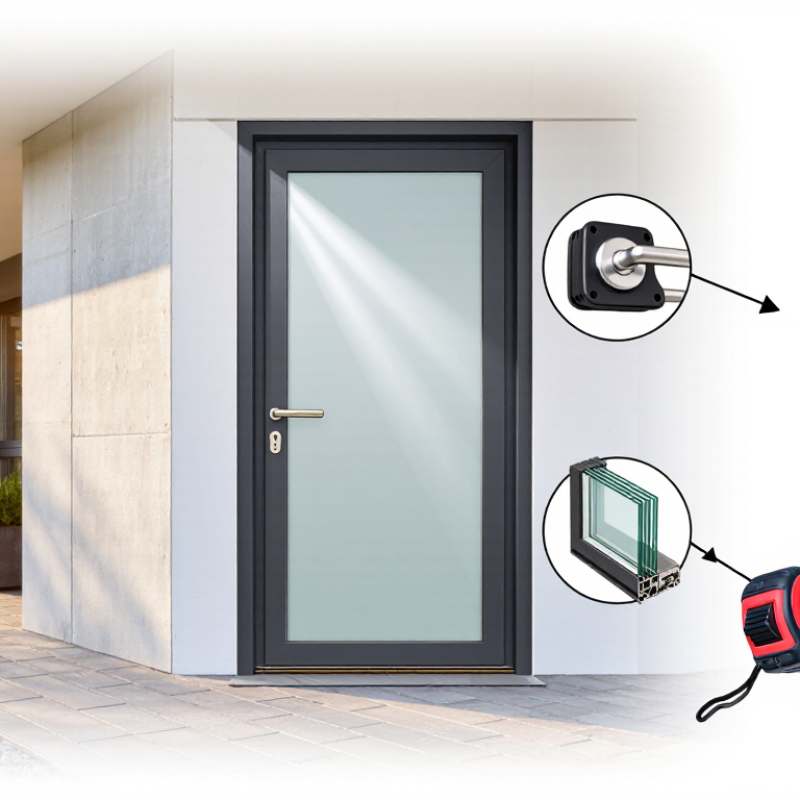
How to Choose the Best Aluminum Residential Door?

Define Your Home’s Requirements for an Aluminum Door

How to Choose the Best Aluminum Residential Door?

Define Your Home’s Requirements for an Aluminum Door

Start with the doorway, not the finish. Measure the width and height at several points, since older openings may be uneven. Note the available clearance, threshold height, and whether the door swings inward or outward. Then consider daily use: a busy entry may need a durable surface and easy-to-clean glazing, while a patio door may prioritize daylight and a wide clear opening. Aluminum is strong, but it conducts heat readily. In colder or hotter climates, look for a thermally broken frame and review the door’s full assembly, including glass, seals, and threshold. The details matter.

Use the National Fenestration Rating Council (NFRC) label to compare U-factor and solar heat gain coefficient (SHGC); lower U-factor generally means less heat transfer. The U.S. Department of Energy’s Energy Saver guidance estimates that windows account for 25–30% of residential heating and cooling energy use. That figure covers windows, not doors, but it underscores why the whole opening deserves attention. Exposure matters, too: wind-driven rain, afternoon sun, and salty air can affect suitable finishes and hardware. A specification may look excellent on paper and still feel wrong in a drafty hallway.

Tips: Before ordering, photograph the opening and measure twice. Ask the installer how the sill will drain and how the frame will be sealed. Small oversights happen. Check them early.

Compare Frame Design, Insulation, and Weather Resistance

When comparing aluminum residential doors, look beyond the frame’s appearance. Narrow profiles create a clean, modern view, but larger openings need adequate reinforcement to resist flexing. Ask how the frame is constructed and whether its corners feel rigid. A sturdy frame should not feel flimsy.

Insulation depends on more than aluminum alone. Because metal transfers heat readily, a thermal break separates the inner and outer frame surfaces, reducing heat flow and the risk of condensation. An insulated door core and well-sealed glazing can further improve comfort. Check published performance ratings, and compare like with like. A high rating cannot compensate for poor installation.

Weather resistance comes down to practical details: continuous weatherstripping, a tight-fitting threshold, and drainage paths that let trapped water escape. Run a hand along the seals; gaps or uneven contact can invite drafts and rain. In exposed or rainy locations, ask how the finish handles moisture and frequent cleaning. Small details matter. No door is fully weatherproof, and that distinction is easy to overlook. Proper fitting and occasional seal checks help the door perform as intended.

Evaluate Security Features, Glass, and Hardware

How to Choose the Best Aluminum Residential Door?
Evaluate Security Features, Glass, and Hardware

A secure aluminum door depends on the whole assembly, not just a heavy slab. Check that the frame is firmly anchored and the lock engages deeply. Ask for test documentation for the complete door assembly; ASTM F476 evaluates forced-entry resistance of swinging door assemblies. For glazed panels, laminated glass can help hold fragments together after impact, though it cannot make a door unbreakable. Inspect the glass edge, frame fit, and locking points in person when possible.

Tips: Test the handle and deadbolt before buying. Look for smooth, firm engagement, sturdy hinges, and hardware suited to frequent use. Ask how replacement parts are obtained. Small details matter.

Glass affects comfort, too. The U.S. Department of Energy’s Energy Saver guidance estimates that heat gain and loss through windows account for about 25–30% of residential heating and cooling energy use. A glazed door adds to the home’s overall glass area, so consider insulated glazing and a low-emissivity coating for your climate. More glass may brighten a hallway, but it can also reduce privacy and leave less solid material around the lock. That trade-off is easy to overlook.

How to Choose the Best Aluminum Residential Door? - Evaluate Security Features, Glass, and Hardware

Feature What to Look For Why It Matters Questions to Ask or Verify
Whole-door security Look for test information covering the complete door assembly, including the leaf, frame, locks, glazing, and fixing method. A strong lock or panel alone does not establish the security of the installed door system. Is the complete door set independently tested or certified? Which configuration and installation conditions does the test cover?
Security classification Where applicable, check for a stated resistance class under a recognized standard, such as EN 1627. Classification can provide a consistent basis for comparing tested resistance, but requirements vary by location and application. Does the certificate apply to this exact door design, glazing, hardware, and size? Is the class suitable for local requirements?
Glazing type Consider laminated safety glass for better retention of glass fragments after breakage. Tempered safety glass is designed to break into smaller pieces. These glass types behave differently when broken. Laminated glass can remain held together, but it is not unbreakable and does not guarantee that entry is prevented. Which panes are laminated or tempered? Is the glass specification included in the tested door configuration?
Glazing placement For doors with glass near the lock, consider whether the design limits access to the interior handle or thumb-turn. Reach-through access may be a concern when glazing is close to door hardware. Can the lock be operated through a broken or removed pane? Would a suitable internal security design reduce this risk?
Locking system Compare a compatible deadbolt or multi-point locking system with a simple latch-only arrangement. A multi-point system engages at more than one location along the door edge; its security still depends on the lock, frame, installation, and test evidence. How many locking points engage? Are the lock, keeps, and door set tested together?
Hinges and fixings Check hinge strength, secure attachment, and protection against pin removal where hinges are exposed from outside. Hinges and their fixings help keep the door supported and attached to the frame. Are hinge pins non-removable or otherwise protected? Are hinges and frame fixings suitable for the door’s weight and exposure?
Aluminum frame and threshold Inspect the frame, corner joints, locking keeps, threshold, and the specified anchoring into the surrounding structure. Door performance depends on the connection between the frame and the building, not just on the aluminum profile. What fixing method and substrate are required? Are installation instructions provided for the actual wall construction?
Hardware durability Choose hardware suited to the door’s use and local conditions, including moisture or coastal exposure where relevant. Wear or corrosion can affect smooth operation and the ability to latch and lock reliably. What maintenance is recommended? Are replacement parts available, and are operating-cycle or corrosion-test details provided?
Installation and adjustment Follow the door manufacturer’s installation instructions and confirm that the door closes, aligns, and locks without excessive force. Misalignment or poor fixing can interfere with locking and may reduce the performance of the assembly. Who will install the door? Will the installer check the frame anchoring, clearances, weather seals, and operation of every locking point?

Selection tip: Compare complete door-set documentation rather than relying on an individual component’s description. Security performance depends on the tested configuration, correct installation, and ongoing maintenance.

Match Door Styles and Finishes to Your Home

Match the door to your home’s visual rhythm, not just its paint color. A slim, dark aluminum frame can sharpen a contemporary façade, while a warm bronze finish may sit more naturally beside brick or timber. For a traditional house, consider divided-light glazing or a softer frame color. Take a sample outdoors; sunlight can make a finish look cooler or brighter than it appears indoors.

Glazing and finish affect comfort as well as appearance. The U.S. Department of Energy estimates that windows account for about 25%–30% of residential heating and cooling energy use. That figure is not specific to doors, but it’s a useful reminder to compare glass options and thermal-performance ratings when choosing a glazed entry door. Match the frame to nearby window finishes where possible. A perfect match is not always necessary.

Budget figures need context. Remodeling’s 2024 Cost vs. Value report estimated a 188.1% cost recouped for a national-average steel entry-door replacement—not an aluminum door, and not a promise of resale value. Choose a finish you can maintain, and ask how its coating handles local sun, rain, and salt air. Dark colors may show dust more clearly. Small details matter. A finish sample can still mislead; check it against your actual siding and trim before ordering.

Check Installation Standards, Warranty, and Total Cost

An aluminum residential door is only as reliable as its installation. Ask the installer to identify applicable local building requirements and provide the door maker’s written installation instructions. Check that the quote covers frame anchoring, sill support, flashing, perimeter sealing, and adjustment of the lock and hinges. These details affect water entry, drafts, and smooth operation. Small details matter. For a replacement, ask how the crew will inspect the rough opening after removing the old frame. Rot or an uneven sill can change the work and price. A checklist is useful, but it cannot reveal every hidden condition behind old trim.

Read the warranty before paying a deposit. Confirm coverage periods for the frame, finish, glass, and hardware, and ask whether labor is included. Look for exclusions involving coastal exposure, cleaning products, or missed maintenance. Keep it documented. A long warranty is less useful if service costs fall to you.

Compare the total installed cost, not just the door price. Request separate line items for delivery, removal, disposal, trim, flashing, interior finishing, and any permit or access charges. Make sure each quote describes the same glass, hardware, and installation scope. I might still choose a higher bid if it explains the work clearly; the cheapest quote can leave important tasks unstated. Set aside a small contingency for concealed damage, but ask the installer to get approval before adding work.

How to Choose the Best Aluminum Residential Door

Compare installation requirements, warranty details, and the full installed cost before making your choice.

How to use this chart: It counts practical checks to review in each category—not product ratings or industry averages.

Installation: opening measurements, flashing and drainage, manufacturer-specified fasteners, and air/water sealing. Warranty: coverage term, covered components and finish, and exclusions or claim process. Total cost: door, installation labor, removal and disposal, finishing, and applicable permits or taxes.

FAQS

Why does frame construction matter for an aluminum door?

Slim frames look modern, but wide openings need reinforcement. Press the corners gently; a flimsy feel deserves a closer look.

What does a thermal break do?

It separates the frame’s inner and outer surfaces, reducing heat transfer and condensation risk. The metal itself is not enough.

Which details help keep out drafts and rain?

Check continuous weatherstripping, a snug threshold, and clear drainage paths. Run your hand along the seals. Feel for gaps.

Can a high performance rating guarantee a comfortable door?

No. Compare similar ratings, and inspect the glazing and insulated core. Poor installation can still cause drafts.

What should an installation quote include?

Look for anchoring, sill support, flashing, perimeter sealing, and lock and hinge adjustment. Ask how the installer checks the rough opening.

What might change the replacement cost after the old door is removed?

Hidden rot or an uneven sill can add work. Ask for approval before extra repairs begin. Old trim can hide surprises.

What should I check in the warranty?

Review coverage for the frame, finish, glass, and hardware. Confirm whether labor is included, and check maintenance exclusions.

How can I compare door quotes fairly?

Compare the total installed cost, including delivery, removal, disposal, trim, finishing, and access charges. Make sure each quote covers the same work. The cheapest one may leave gaps.

Conclusion

Choosing the right Aluminum Residential Door starts with understanding your home’s needs, including the entrance size, local weather, desired privacy, and everyday use. Compare frame construction and insulation to help maintain indoor comfort, and look for weather-resistant seals and finishes suited to your climate. Security should also guide your decision: consider the door’s structural strength, glass type, locking options, hinges, and other hardware.

The door should complement your home’s architectural style through its shape, color, and finish, while remaining practical to maintain. Before buying, confirm that measurements and installation requirements are clear and that the installer follows appropriate installation standards. Review warranty coverage and compare the full cost, including delivery, installation, and future upkeep. Weighing appearance, performance, security, and long-term value together can help you select a door that fits your home and your budget.

Olivia

Olivia

Olivia is a dedicated marketing professional with a strong understanding of the company’s products, customers, and industry landscape. With a practical, research-driven approach, she transforms complex product information into clear, useful, and engaging content that helps readers make informed......