Choosing the right Aluminium Entry Door begins with performance, not appearance. A beautifully finished door can still leak air, transmit heat, or weaken under frequent use. The International Energy Agency’s Buildings report states that buildings consume about 30% of global final energy. The U.S. Department of Energy also estimates that windows and doors can account for 25–30% of residential heating and cooling energy loss. These figures make the entrance a practical energy decision, not merely a design feature.
Look for a thermally broken frame, insulated panels, durable weather seals, and low air-infiltration results. Thermal breaks reduce heat transfer through the aluminium frame. This matters beside a cold hallway or a sunlit south-facing entrance. Ask suppliers for documented U-values, air-leakage ratings, water-penetration tests, and hardware-cycle results. ENERGY STAR and NFRC guidance can help buyers compare certified products more reliably. Regional standards still differ, so check the applicable building requirements before ordering. Small details matter. A poorly adjusted threshold can undermine an otherwise excellent door.
Material quality also deserves close attention. Powder coating should be suitable for the local exposure, especially near salt air or heavy rainfall. Stainless-steel hinges and multi-point locks can improve security and service life. However, higher price does not guarantee better performance. This is where buyers often make mistakes. Compare the complete door assembly, including glazing, frame, seals, threshold, installation, and warranty. Product data may look impressive, yet installation errors can create drafts within months. A qualified installer should verify the opening, drainage paths, alignment, and final operation. No single specification tells the whole story. The right Aluminium Entry Door balances climate, security, maintenance, accessibility, and architectural character.
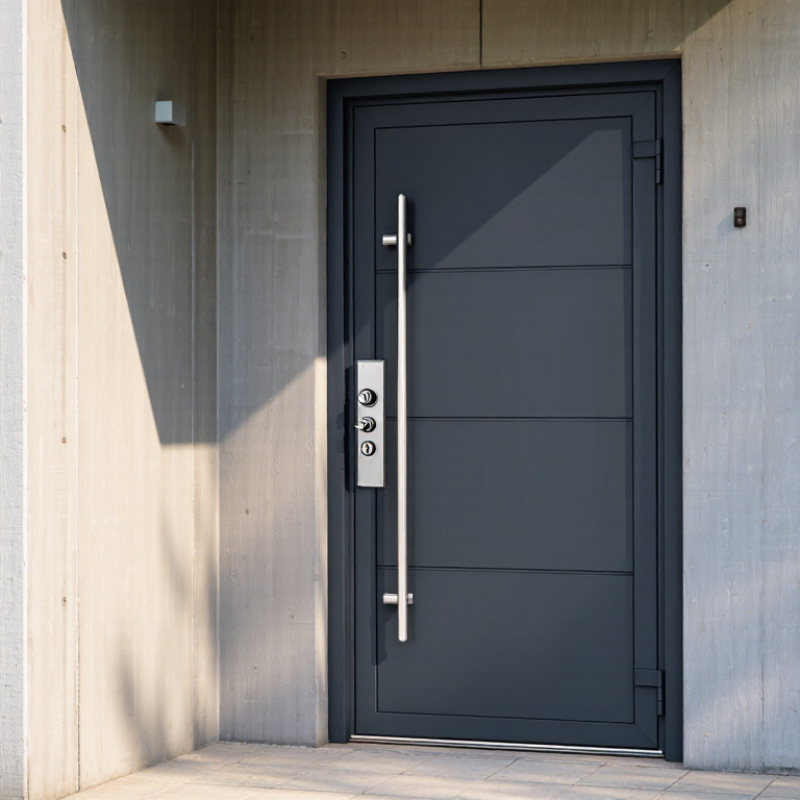
Choosing an aluminium entry door begins with defining how your household uses the entrance. Before comparing colours or panel designs, record your practical needs.
Measure the opening, wall depth, and available clearance. Note whether the door opens inward or outward. Small errors matter.
Start with security. Consider a strong frame, dependable hinges, and a multi-point locking system. Ask how the door resists forced impact and whether the hardware has been independently tested.
Privacy may also influence your choice. Frosted or textured glass can admit daylight without exposing the hallway.
Weather performance deserves equal attention. If rain reaches the entrance, choose an effective sill, drainage path, and suitable weather seals. In colder areas, a thermally broken frame can reduce heat transfer. In hot climates, shaded glazing may limit indoor heat.
Think carefully. A beautiful door can still feel uncomfortable if its insulation is weak.
Your priorities may compete. Larger glass areas brighten the foyer but can reduce privacy and raise maintenance needs. Dark finishes may look refined, yet they can show dust and scratches more clearly.
I once focused too much on appearance and overlooked the threshold height. That mistake affected daily cleaning and accessibility.
A qualified installer should check the structure, installation tolerances, and applicable local building requirements. Request clear performance data, maintenance guidance, and written warranty terms before ordering. Reliability begins with details you can verify.
How to Choose the Right Aluminium Entry Door?
Compare Aluminium Door Types, Styles, and Opening Configurations
Aluminium entry doors come in several practical types. A single-leaf door suits most compact entrances and is easier to operate daily. Double doors create a wider opening for furniture, guests, and strong visual impact. Sliding doors save swing space, while pivot doors offer a dramatic appearance in larger foyers. Each type needs careful site measurements. Check the wall opening, threshold height, and available clearance before choosing.
Style should support the building, not compete with it. Flush panels create a clean, modern surface. Narrow glazed sections bring daylight into darker hallways. Full-height glass feels open, but privacy and heat control may need attention. Traditional panel patterns can soften a sharp exterior. Finishes also matter. Dark colours may show dust and scratches more clearly than lighter ones. Small details matter.
Opening configuration affects comfort and safety. An inward-opening door protects the exterior walkway, but it requires enough interior floor space. An outward-opening door can improve indoor circulation, subject to local requirements. Left-hand and right-hand hinges should match furniture placement and the natural approach path. For French doors, confirm which leaf opens first. A low threshold helps accessibility, although poor drainage design may allow water inside. Thermal breaks, compression seals, and adjustable hinges improve long-term performance. A beautiful door can still feel inconvenient. Recheck the decision at different times of day, especially when sunlight, rain, and household traffic change the entrance experience.
Choosing an aluminium entry door starts with thermal performance, not appearance. The U.S. Department of Energy reports that windows and doors can contribute significantly to residential heating and cooling losses. Ask for the complete door U-factor, not only the glass value. Lower U-values indicate better insulation. A thermally broken frame, insulated core, low-emissivity glazing, and accurate weather seals help reduce cold surfaces around the entrance. Check air-leakage results too. A small installation gap can undermine excellent factory data.
Security requires more than a heavy-looking panel. The door should resist impact, prying, and lock manipulation. European EN 1627 testing provides useful resistance classes, such as RC2 and RC3, when independently verified. Look for a multipoint locking system, protected cylinders, reinforced hinges, and laminated glass near the handle. The U.S. Federal Bureau of Investigation has repeatedly identified forced entry as a major burglary method, although its statistics cannot predict every household’s risk. Personal judgment still matters. A strong lock is useless if the frame is poorly anchored.
Durability depends on materials and maintenance. Aluminium does not rot, but coastal salt, standing water, and poor drainage can damage finishes and hardware. AAMA 2605 is widely used for high-performance architectural coatings, so request documented coating compliance and corrosion testing. Inspect the threshold: it should drain outward, seal tightly, and remain stable under foot traffic. Ask for test reports, installation details, and warranty conditions. Paperwork matters. I would also check a local installation after one wet winter; laboratory performance can look perfect, while real buildings reveal movement, drafts, or fading.
How to Choose the Right Aluminium Entry Door?
Begin with accurate sizing, not visual preference. Measure the opening at the top, middle, and bottom. Record width, height, and wall depth. Use the smallest practical measurement, then allow installation clearance. A door that looks generous may still create a cold, awkward threshold. Check the frame’s thermal break and published U-factor. The U.S. Department of Energy reports that windows and doors can account for about 25–30% of household heating and cooling energy use. Small details matter.
Glazing should match the room’s exposure. Low-emissivity double glazing can reduce heat transfer, while solar-control glass helps on strong south- or west-facing elevations. The National Fenestration Rating Council recommends comparing certified U-factor and solar heat gain coefficient values, rather than trusting appearance alone. Clear glass brings daylight, but privacy glass may suit a street-facing entrance better. A decorative choice can become a comfort problem.
Finish selection needs practical testing. Powder-coated surfaces generally offer consistent colour, but request samples under daylight and shade. Dark finishes may absorb more solar heat. Hardware deserves equal attention: adjustable hinges, a solid handle, a reliable cylinder, and continuous weather seals support smooth daily use. Multi-point locking can improve compression, though poor adjustment defeats its purpose. I would not choose the most expensive option automatically. Installation quality often matters more than impressive specifications. Recheck the threshold, drainage, and seal alignment before signing off.
| Selection Factor | Common Options | Practical Guidance | Check Before Ordering |
|---|---|---|---|
| Door size | Common US single-door nominal sizes include 32 × 80 in, 34 × 80 in, and 36 × 80 in (approximately 813 × 2032 mm, 864 × 2032 mm, and 914 × 2032 mm). | Choose a clear opening that allows comfortable passage and suits the entry layout. Wider doors may help with moving furniture or improving accessibility. | Measure the existing frame, wall opening, sill, and available swing space. Nominal door size is not the same as the required rough-opening size; confirm dimensions with the door supplier. |
| Door configuration | Single hinged door; door with one or two sidelights; paired doors; inward- or outward-opening configurations. | A single door suits most standard entrances. Sidelights add daylight, while paired doors require more wall and landing space. | Check local egress requirements, property boundaries, weather exposure, threshold height, and whether the door swing will obstruct a path or landing. |
| Glazing area | Unglazed; small decorative panel; half-height panel; full-height panel; glazed sidelights. | More glass can bring in more natural light. Smaller or obscured panels can offer greater privacy; clear glass gives a more open view. | Consider privacy, daylight, security, and the direction the entrance faces. Confirm that glass in or near the door meets applicable safety-glazing rules. |
| Glazing type | Clear, frosted, patterned, or tinted glass; single or insulated glazing; tempered or laminated safety glass where required. | Insulated glazing can help reduce heat transfer compared with single glazing. Frosted or patterned glass can improve privacy without fully blocking daylight. | Ask for the glass specification and whole-door thermal-performance figures. Requirements for safety glass vary by location and by the glass panel's position. |
| Frame and thermal performance | Aluminium frame with thermal break; frame with insulated glazing; weather seals and a compatible threshold. | A thermal break separates interior and exterior frame sections to reduce heat transfer through the aluminium. Performance depends on the complete door assembly. | Compare tested whole-door U-factor or U-value rather than relying on frame material alone. Check air-leakage and water-resistance ratings when available. |
| Exterior finish | Powder-coated colour; anodized aluminium finish; smooth, textured, or metallic appearance. | Select a finish suited to the home's exterior and local exposure. A lighter colour may show less heat absorption than a dark colour in strong sun, depending on the product and conditions. | Confirm colour availability, finish warranty, cleaning instructions, and suitability for coastal or highly exposed environments. |
| Locks and security hardware | Deadbolt; multipoint locking; keyed cylinder; privacy or access-control options where compatible. | A multipoint system engages the frame at more than one point. Choose hardware that matches the door's intended use and provides straightforward operation for household members. | Check compatibility with the door system, local security requirements, keying needs, and any accessibility or emergency-egress requirements. |
| Handles, hinges, and accessories | Lever or pull handle; concealed or visible hinges; door viewer; closer; restrictor; compatible threshold and weather seals. | Choose handles that are comfortable to grip and finishes that coordinate with the door. Accessories should suit the door's weight, opening direction, and frequency of use. | Verify hinge capacity, handle handing, cylinder type, seal arrangement, and whether all hardware is included with the door. |
| Installation and maintenance | Professional installation; secure fixing; perimeter sealing; periodic cleaning and hardware adjustment. | Accurate installation helps the door open smoothly and supports effective weather sealing. Routine cleaning and checks can help maintain the finish and moving parts. | Confirm installer responsibilities, site-preparation requirements, drainage details, warranty terms, and the recommended care instructions. |
A suitable aluminium entry door begins with installation standards, not appearance. Check local building requirements for structural safety, fire performance, ventilation, and accessibility. These rules vary by location. A qualified installer should verify the opening, wall condition, threshold height, and drainage path before ordering. Measure twice. A door that fits poorly may leak during heavy rain or close unevenly within months.
Look for documented testing of air leakage, water resistance, wind pressure, and thermal performance. Ask how the frame connects to the wall, and whether the installer uses approved flashing and sealants. I have seen attractive doors fail because the sill lacked proper support. That mistake is expensive to correct later. It also reminds me that installation quality can matter more than the door’s finish.
Maintenance needs should remain practical. Inspect seals, hinges, locks, and drainage openings every few months. Clean the aluminium with mild soap, soft water, and a non-abrasive cloth. Avoid harsh chemicals. Small scratches and loose seals should be addressed early, although perfect upkeep is unrealistic for busy households. Long-term value includes energy efficiency, repair access, replacement hardware, and warranty clarity. A cheaper door may cost more when specialist repairs, drafts, or repeated adjustments appear. Choose a system that local professionals can service years from now.
Ask for the complete door U-factor, not only the glass rating. Lower values usually indicate better insulation. Look for a thermally broken frame, insulated core, and tight weather seals. Check air-leakage results too.
A small gap around the frame can create drafts. Factory test results may not match your home. Confirm the opening size, installation clearance, and seal alignment. Real buildings can behave differently.
Measure width, height, and wall depth at the top, middle, and bottom. Record every result. Use the smallest practical measurement. Leave suitable clearance for installation.
Low-emissivity double glazing can reduce heat transfer. Solar-control glass may help on sunny elevations. Privacy glass suits entrances facing busy streets. Clear glass provides more daylight, but may reduce privacy.
Look for independently verified impact and resistance testing. A multipoint lock, protected cylinder, reinforced hinges, and laminated glass can improve protection. A heavy panel alone proves little. The frame must be anchored properly.
Yes, poor adjustment or weak anchoring can undermine it. Check that the handle, hinges, and locking points operate smoothly. Ask to see installation details and test reports. I would not trust appearance alone.
Request coating compliance and corrosion-test documents. Coastal salt, standing water, and poor drainage can damage finishes. Compare colour samples in daylight and shade. Dark finishes may become hotter in direct sun.
It should drain outward and seal tightly. It must remain stable under regular foot traffic. Check for movement, drafts, and uneven gaps. I would inspect it again after one wet winter. Lab data is not everything.
Request U-factor data, air-leakage results, security testing, coating information, and installation instructions. Read the warranty conditions carefully. Keep the documents for future repairs. Paperwork can reveal missing details.
Not necessarily. Installation quality often matters more than impressive specifications. Choose suitable glazing, seals, hardware, and drainage first. I might still choose a simpler option after checking those details.
Choosing the right Aluminium Entry Door begins with identifying your practical needs, design preferences, and budget. Consider the door’s main purpose, such as improving security, energy efficiency, natural light, or street appeal. Compare different aluminium door types, styles, and opening configurations to find an option that suits your home’s layout and daily use. Sliding, hinged, folding, and pivot designs each offer different benefits in terms of space, appearance, and accessibility.
Next, assess thermal performance, weather resistance, durability, and security features, including insulated frames, quality locking systems, and strong glazing. Select suitable dimensions, glass types, colours, finishes, handles, and other hardware to create a balanced and attractive entrance. Professional installation is essential for proper alignment, sealing, and long-term performance. Finally, consider cleaning requirements, finish maintenance, warranty conditions, and expected service life so your investment continues to provide comfort, protection, and visual appeal for many years.
