0%

Choosing a Front Door from another country can seem straightforward until measurements, climate, and delivery meet. The best option is not simply the most attractive one. It should fit the opening, suit local weather, and support the household’s daily needs. Small details matter. A threshold height, swing direction, or lock preparation can affect installation. These details are easy to miss in polished product photos.

This guide presents ten practical buying tips for global buyers. Compare materials, finishes, glazing, hardware, and stated performance—not just price. Wood, steel, fiberglass, and aluminum each have different maintenance needs and weather tolerances. Ask the seller for written specifications, including frame dimensions and what the quoted size measures. A catalog image may look complete while leaving basic questions unanswered. That deserves a closer look.

Shipping also needs attention. Confirm packaging, delivery terms, damage procedures, and whether unloading is included. Review warranty coverage in writing, especially for finishes and hardware. Keep records. Local building requirements vary, so do not assume a product accepted in one market will suit another. Where specifications are unclear, ask a qualified local installer to review them before ordering. It takes extra time. Sometimes, that pause prevents costly surprises—and sometimes the uncertainty remains, so build room for it into your decision.
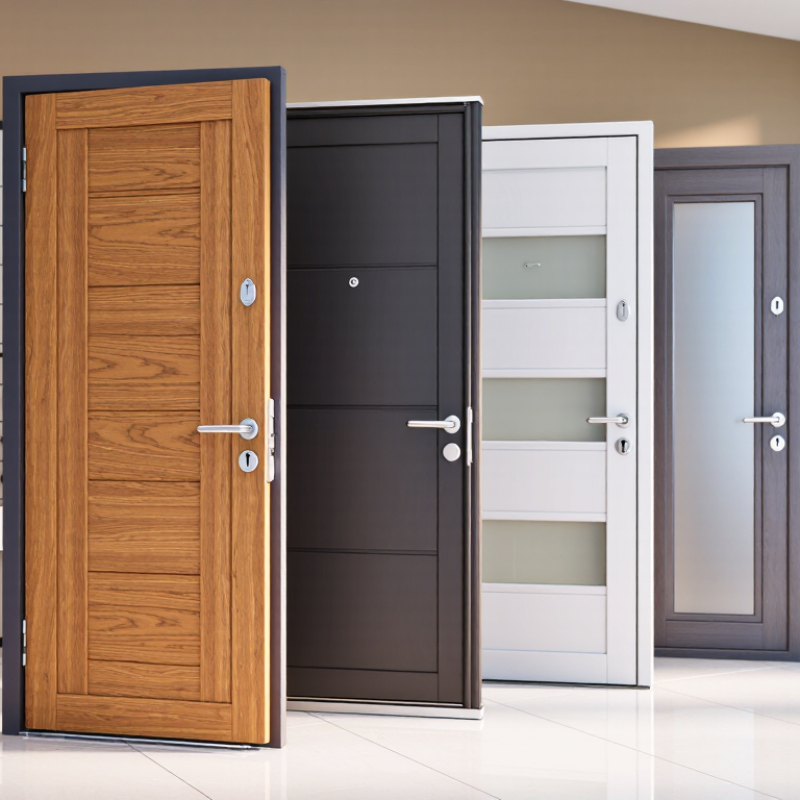
10 Front Door Buying Tips for Global Buyers

Define Your Entryway Needs and Set a Buying Budget

Define your entryway needs before comparing door prices. Measure the opening, wall depth, and threshold carefully. Note whether the door swings inward or outward, and check nearby walls, steps, and storm doors. A beautiful slab is no bargain if it blocks a narrow hall. Decide how much daylight, privacy, insulation, and sound reduction matter. Then choose a realistic budget that includes the frame, hardware, installation, finishing, and removal of the old door. Small items add up.

Tip: Write down your must-haves, then separate them from upgrades. Set aside a contingency for repairs to hidden water damage or an uneven frame. It may feel overly cautious. Still, older entryways can surprise you.

Use regional quotes rather than relying on national averages. Remodeling magazine’s 2024 Cost vs. Value report estimated a national average cost of $2,355 for a steel entry-door replacement and a resale value of $4,430. These figures are benchmarks, not promises; location, project scope, and labor rates affect actual costs. Ask contractors to itemize the door, labor, disposal, and any frame repairs. Compare warranty coverage and energy-performance information, too. The U.S. Department of Energy recommends considering climate and a door’s energy performance when choosing exterior doors. One detail buyers sometimes miss is the threshold seal. Check it in person, if possible. A tight-looking door can still leave a draft.

Compare Door Materials, Styles, and Climate Suitability

A front door should suit the weather it faces, not just the home’s style. Start with climate, not color. In humid regions, fiberglass resists moisture and needs relatively little upkeep. Solid wood offers warmth and natural grain, but repeated rain and strong sun can cause swelling, fading, or finish damage. Steel can provide a sturdy feel and an insulated core, though scratches may expose it to rust, especially in salty coastal air.

Style affects comfort, too. Large glass panels bring daylight into a hallway, but they can reduce privacy and increase heat gain. A narrow glazed panel or protected sidelight may be a better fit for a bright, hot entrance. Raised panels and simple flat designs both work across many climates; the details around the frame matter just as much. A good door can still perform poorly if installation leaves gaps.

Compare more than material names. Check insulation information, weather seals, finish requirements, and suitability for local wind and temperature extremes. Conditions vary even within one country. This comparison is not perfectly neat: a shaded wooden entry may fare better than an exposed one, while a well-installed steel door can need more care near salt spray. Measure the opening carefully, and ask how the complete door system—not just the slab—handles your climate.

Check Measurements, Security Features, and Accessibility

Before comparing styles, measure the actual opening, not just the old door slab. Record width at the top, middle, and bottom, then check height on both sides. Measure the frame depth too; wall thickness can vary between buildings. Measure twice. Note the hinge side and swing direction, and allow for flooring that may be added later. A few millimetres can affect fitting, sealing, and smooth operation.

Security depends on the whole assembly. Check the door, frame, hinges, and locking points together, rather than judging strength by appearance. Ask for clear specifications on lock performance and any glazed panels, then confirm they suit your building and local requirements. A strong lock in a weak frame is a mismatch. Installation matters, too, and poor alignment can stop a lock engaging fully. Details are easy to miss.

Accessibility starts with the clear opening when the door is open, not the panel’s stated width. Consider wheelchair passage, handle height, and space to approach or turn on both sides. Lever handles are often easier to use than small round knobs. Check the threshold carefully: a low profile helps reduce a trip edge, but weather exposure may require a different design. The best choice depends on the entrance. I would recheck the measurements after choosing a threshold; it is an easy step to overlook.

10 Front Door Buying Tips for Global Buyers

Check measurements, security features, and accessibility before you buy.

How to use this chart: These are common nominal single-door slab widths in the U.S.; actual options vary by market. Measure the existing frame and opening before ordering. For accessibility, ADA standards specify a minimum 32-inch clear opening for applicable doorways—the slab width alone does not guarantee this clearance. Also compare lock and hinge security, weather sealing, and local building requirements.

Verify Local Building Codes, Certifications, and Import Rules

Before ordering a front door across borders, confirm the destination’s building code with a local building professional or authority. Requirements may cover fire resistance, wind pressure, water penetration, thermal performance, accessibility, and emergency egress. A door tested for one market may not meet another market’s accepted standard. The stakes extend beyond appearance:

UNEP and the Global Alliance for Buildings and Construction reported that buildings used 34% of global energy and produced 37% of energy- and process-related CO₂ emissions in 2022. Those figures cover buildings overall, not doors, but they show why verified performance matters.

Tip: Request the test standard, report number, product dimensions, and rating for the exact door configuration. Check that the certificate is accepted locally; glass size, frame, hardware, and installation can change performance. A certificate is not a passport.

Before shipment, ask the importer or customs broker which product descriptions, origin details, conformity documents, and labels are required. Compare the paperwork with the invoice and the markings on the crate. Small discrepancies can delay clearance. Keep digital copies. Requirements change, and a supplier’s past shipment is not proof that today’s entry rules are the same. Verify current requirements with local authorities, and get written confirmation where possible.

Evaluate Suppliers, Shipping Costs, Warranties, and Installation

Tip: Request a supplier’s current product drawings, material specifications, and photographs of comparable doors. Check frame dimensions, finish options, hardware, and weather-seal details against your project requirements. Ask how quality checks are recorded before dispatch. A polished sample can still differ from a production batch.

Compare complete delivered costs, not just the unit price. Ask for separate estimates covering packaging, inland transport, freight, insurance, and destination handling. Shipping costs vary with door size and protective crating. Confirm who arranges each step and when payment is due. Leave room for unexpected fees.

Tip: Get the warranty in writing and read its exclusions. Check coverage periods for the door, finish, glass, and hardware; these may differ. Ask how claims are handled from your location, including who pays return freight or replacement shipping. Keep invoices and installation records. Easy to overlook.

Before ordering, share the actual opening measurements with the supplier and confirm the door’s handing, threshold, and installation clearances. Ask whether installation instructions and suitable fixings are included. A local installer can check site conditions before delivery, especially for uneven floors or exposed entrances. I would not assume a standard opening fits without measuring twice.

FAQS

What should I measure before choosing an entry door?

Measure the opening, wall depth, and threshold. Note the swing direction and nearby walls, steps, or storm doors. A wide slab can block a narrow hall.

How should I set a realistic budget?

Include the door, frame, hardware, installation, finishing, and old-door removal. Keep a contingency for hidden water damage or an uneven frame. Small costs add up.

Which door features should I compare?

Consider daylight, privacy, insulation, and sound reduction. Check the threshold seal in person if possible. A door may still let in drafts.

How can I compare prices fairly?

Request local, itemized quotes for materials, labor, disposal, and frame repairs. Compare warranty coverage and energy-performance details, not only the listed price.

What should I verify before ordering a door from another region?

Ask a local building professional which performance standards apply. Request reports for the exact door configuration, including its glass, frame, and hardware. A certificate alone may not settle it.

What shipment details should I confirm?

Ask the importer or customs broker about required product descriptions, origin details, labels, and documents. Match the paperwork to the invoice and crate markings. Keep digital copies.

How can I assess a supplier and shipping quote?

Request current drawings, material details, finish options, and comparable product photos. Compare packaging, transport, freight, insurance, and destination handling separately. Leave room for extra fees.

What should I check about warranties and installation?

Read exclusions and coverage periods for the door, finish, glass, and hardware. Ask who pays for return or replacement shipping. Share precise measurements, door swing, threshold, and clearances with the supplier. I would not assume a standard opening fits. Measure twice. Have a local installer inspect uneven floors or exposed entrances before delivery.

Conclusion

Buying a Front Door for an international property starts with understanding how the entryway will be used, the look you want, and the budget available. Compare materials and styles while considering local weather, maintenance needs, and energy performance. A door suited to a mild climate may not be the best choice for a location with heavy rain, strong sun, or temperature extremes.

Before ordering, confirm the opening measurements and consider security, ease of access, and everyday usability. Check that the door meets applicable building requirements and has the necessary certifications for its destination. Compare suppliers by reviewing product details, shipping expenses, warranty terms, and installation arrangements. Careful planning across these areas can help global buyers choose a door that fits the home, arrives as expected, and works well over time.

Ethan

Ethan

Ethan is a professional marketing specialist dedicated to helping customers better understand the value, quality, and practical applications of the company’s products. With a strong understanding of product development, market trends, customer needs, and digital communication, he creates clear,......