Choosing an Aluminum Exterior Door involves more than comparing frame colors or catalogue prices. Buyers need to consider thermal performance, weather resistance, hardware quality, finish durability, and installation support. In China, manufacturers differ in production scale, customization options, export experience, and the level of technical guidance they provide. Details matter. A well-finished sample may look convincing, but project conditions can reveal issues that a brochure cannot show.
This guide introduces ten Chinese manufacturers and offers a practical starting point for comparing their capabilities. It considers product range, manufacturing experience, quality-control practices, customization, and communication with overseas customers. These factors can help architects, builders, distributors, and homeowners prepare better questions before requesting a quotation. Ask for current test reports, clear specifications, warranty terms, and references for comparable projects. Where possible, inspect a sample and confirm how measurements, drainage, glazing, and hardware are handled. Rankings can vary with project needs, and available information may change. A company’s reputation alone does not guarantee the right fit. Some details are easy to overlook, and not every supplier explains them equally well. Use this list as a guide, then verify the facts directly with each manufacturer before making a decision.
Aluminum has a density of about 2.70 g/cm³, making it lightweight compared with many structural metals. In exterior doors, this can reduce sash weight while allowing slim frames and broad glass panels. The figure describes pure aluminum; common frame alloys vary slightly. A lighter frame is not automatically stronger. Profile shape and wall thickness matter too.
A thermal break is an insulating strip, often made from polyamide, placed between the inner and outer aluminum sections. It slows heat transfer through the frame, helping limit indoor temperature swings and condensation risk. It does not stop heat loss entirely.
Small detail. Big effect.
Glass, weather seals, drainage, and installation also influence the finished door’s performance. One easy mistake is treating the thermal break as the whole insulation system.
When comparing Chinese manufacturers, ask for frame-section drawings and test data for the complete door, not just the aluminum profile. Check the thermal-break width, seal arrangement, and corner construction. A thicker strip may help, but design and assembly still count. Specifications can look impressive on paper; careful installation may decide whether the door feels tight and quiet after a wet, windy season.
GB/T 8478-2020, China’s national standard for aluminum alloy doors and windows, sets technical and performance requirements for these products. For exterior doors, 2.0 mm is a key minimum wall-thickness benchmark for specified load-bearing profiles. It is not a guarantee that every part of a door has a 2.0 mm wall. Buyers should check which profiles the supplier measures and request documented test results. A caliper reading on the hinge-side stile is useful, but it cannot assess the frame’s full performance. Useful, not conclusive.
The China Association of Building Energy Efficiency’s 2024 China Building Energy Consumption Research Report estimates that whole-process building energy use accounted for about 45.5% of national energy consumption in 2022, including materials, construction, and operation. That figure gives the building envelope wider significance, though it does not measure door performance alone. When comparing manufacturers, ask for profile-thickness records alongside air-tightness, water-tightness, and wind-pressure test reports. Check corner joints, seals, and hardware in person where possible. A thicker profile can still disappoint if fabrication is poor. That detail is easy to overlook.
A useful comparison of China’s aluminum exterior door manufacturers should look beyond polished catalogs. Certifications provide a starting point, not a guarantee of consistent production. Check whether certificates are current, issued to the factory being evaluated, and relevant to the exact door system. Ask for the tested configuration, including frame dimensions, glazing, hardware, and finish. Small changes can affect performance.
Capacity is best assessed through evidence, not a large number on a brochure. Request recent production figures, typical lead times, and records showing how orders move from extrusion and fabrication to final inspection. A factory tour can reveal practical details: organized workstations, labeled components, and protected finished frames. Export experience matters too. Review destination markets, packaging methods, and examples of shipment documentation with sensitive details removed. Good answers are specific.
Test data deserves close reading. Ask for reports covering air leakage, water penetration, wind resistance, and thermal performance where these apply to the project. Check the laboratory, test date, sample size, and pass criteria. Compare like with like. A result for one size or glazing package may not represent another. I would also ask how failed inspections are recorded; suppliers may not volunteer that detail. No evaluation is perfect, and a neat spreadsheet can hide gaps. Verify key claims independently before shortlisting.
Evaluation framework only. No company-specific rankings or performance claims are presented because independently verifiable manufacturer records were not provided. Verify each item against current documents and the requirements of the destination market.
| No. | Evaluation Dimension | What to Verify | Relevant Evidence or Reference | Verification Status |
|---|---|---|---|---|
| 1 | Legal identity and factory location | Confirm the legal entity, registered business scope, and whether the stated production site belongs to or is authorized by that entity. | Current business registration records; factory address; site audit or production-site documentation. | Not verified — records required |
| 2 | Quality management certification | Check certificate holder, covered sites and activities, issuing body, validity, and current status. Certification alone does not prove a door’s product performance. | A valid ISO 9001 certificate and confirmation from the certification body or its registry. | Not verified — certificate required |
| 3 | Environmental management certification | Verify the certificate’s scope and covered manufacturing sites; treat it as management-system evidence, not product certification. | A valid ISO 14001 certificate, where relevant to the buyer’s requirements. | Not verified — certificate required |
| 4 | Production capacity | Assess actual output for the specified door type, size, finish, and configuration; distinguish installed capacity from current available capacity. | Recent production records, line details, shift schedules, order backlog, and an on-site or third-party audit. | Not verified — production evidence required |
| 5 | Aluminum and component traceability | Check material grades, profile specifications, hardware, coatings, and whether batch records can be linked to supplied products. | Supplier declarations, purchase records, material or coating reports, and production batch records. | Not verified — traceability records required |
| 6 | Export experience and destination-market compliance | Confirm shipment history for the relevant product and destination. Export experience does not by itself establish compliance with local building regulations. | Redacted shipping or customs records, customer references, and destination-specific compliance documentation. | Not verified — export evidence required |
| 7 | Air leakage, water penetration, and structural performance | Review results for the tested door assembly, test specimen, dimensions, configuration, and stated performance levels. | Applicable reports may reference ASTM E283 (air leakage), ASTM E331 (water penetration), and ASTM E330/E330M (structural performance); confirm the required edition and jurisdiction. | Not verified — product test reports required |
| 8 | Product performance documentation | For European-market projects, check whether the product and intended use fall within the applicable scope and requirements. Do not treat a standard reference as proof of conformity. | EN 14351-1 addresses performance characteristics of windows and external pedestrian doorsets; verify applicable regulations, assessment route, and current requirements. | Not verified — product documentation required |
| 9 | Fire and smoke performance, if required | Confirm that the complete doorset, including frame, hardware, seals, and installation details, matches the tested or assessed configuration. | For applicable European fire- or smoke-resisting doorsets, check EN 16034 alongside the relevant product and regulatory requirements. | Not verified — evidence required if applicable |
| 10 | Test-report credibility and product consistency | Check laboratory identity and accreditation scope, report date, specimen configuration, deviations, and whether production units match the tested design. | Complete laboratory reports, accreditation details, drawings and bill of materials for the tested assembly, plus change-control records. | Not verified — report and traceability review required |
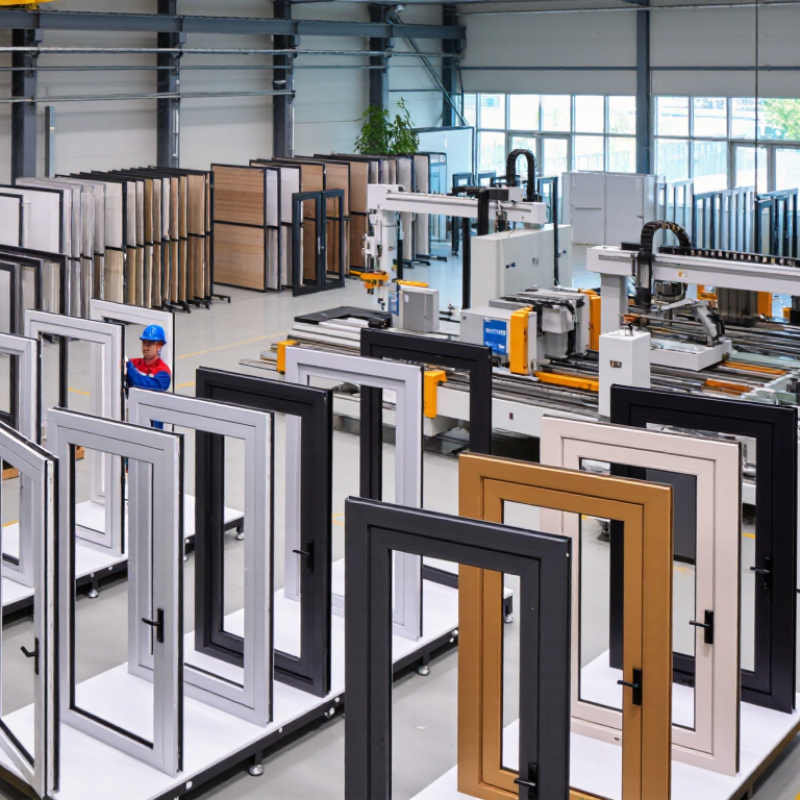
China’s aluminum exterior-door manufacturers differ more by production focus than by appearance. A profile of one factory might emphasize thermally broken frames, with polyamide strips separating inner and outer aluminum. Another may specialize in coastal projects, where coating thickness and corrosion testing deserve close review. A third could focus on narrow-frame designs that admit more daylight. A fourth may offer custom sizes, though unusual dimensions can extend lead times.
Some manufacturers build doors for high-volume housing projects, prioritizing repeatable dimensions and stable hardware supply. Others make heavier entrance systems, where hinge capacity and threshold drainage matter. A seventh profile might highlight automated cutting and corner joining; buyers should still inspect sample joints. An eighth may serve renovation work, offering multiple finishes and glazing options. Details vary.
A ninth manufacturer could concentrate on energy performance, but published figures need supporting test reports for the complete door assembly. A tenth may provide export-oriented packaging and installation guidance, useful when products travel far from the factory. In practice, a polished catalog proves little on its own. Request drawings, finish samples, warranty terms, and records from comparable projects. Even then, factory claims can be difficult to verify remotely. A video call helps, but it is not an inspection.
For a fair comparison of ten Chinese aluminum exterior-door manufacturers, request prices against one shared specification: opening size, frame depth, glass build-up, finish, hardware, and packing. A low quotation may exclude installation accessories or export packing. That is easy to miss. Compare the complete delivered cost, not just the factory unit price. For lead time, ask for separate dates for drawings, production, inspection, and shipment; a single “days” figure can hide waiting time.
Warranty length matters, but so do exclusions. Confirm in writing who covers finish fading, hardware failure, glass defects, and freight for replacement parts. Ask for recent test reports tied to the offered door configuration, not a similar model. ASTM E283 measures air leakage, while ASTM E547 evaluates water penetration under cyclic pressure. Test the assembly. Frame and sash details can change results.
Performance has energy consequences. The U.S. Department of Energy’s Energy Saver guidance estimates that windows account for 25–30% of residential heating and cooling energy use; glazed doors can also affect envelope performance. NFRC ratings report U-factor and solar heat gain coefficient, making comparable figures easier to check. Still, ratings do not replace water and structural testing. Ask for laboratory name, test date, specimen size, and pressure results. A tidy spreadsheet helps, but supplier claims sometimes need another round of questions.
Compare frame design, thermal breaks, coating, glazing, hardware, and production focus. Appearance alone tells little.
Polyamide strips separate inner and outer aluminum sections. This can reduce heat transfer through the frame, but request evidence for the complete door.
Check coating thickness and corrosion-test records. Salt air is demanding; a finish sample may help, but it cannot prove long-term performance.
Use one shared specification for opening size, frame depth, glass, finish, hardware, and packing. A low unit price may leave out export packing or accessories.
Ask for separate dates for drawings, production, inspection, and shipment. One broad “days” figure can hide waiting time.
Ask for test reports matching the exact offered door configuration. Check the laboratory, test date, specimen size, and pressure results.
ASTM E283 measures air leakage. ASTM E547 evaluates water penetration under cyclic pressure. Frame and sash details can change the results.
Get written terms for finish fading, hardware failure, glass defects, and replacement-part freight. The fine print matters.
No. NFRC ratings report U-factor and solar heat gain coefficient, but they do not replace water or structural testing. Not always.
It can show equipment and sample joints, but it is not an inspection. Remote checks leave gaps; buyers may need to ask again.
This guide explains the key considerations behind choosing an Aluminum Exterior Door, beginning with aluminum’s approximate density of 2.70 g/cm³ and the role of thermal-break design in limiting heat transfer. It also introduces China’s GB/T 8478-2020 product standard and the commonly referenced 2.0 mm profile-thickness benchmark, helping readers understand which specifications to check when comparing exterior doors.
The article profiles ten leading Chinese manufacturers and outlines a practical way to assess them using certifications, production capacity, export experience, and relevant test data. A side-by-side comparison considers price, lead time, warranty terms, and tested performance, giving buyers a clearer framework for evaluating options. Rather than relying on a single specification, readers can use these factors together to identify products and suppliers that best match their project requirements.
