0%

A premium entrance should feel solid before it looks impressive. The handle turns smoothly, the leaf closes without a shudder, and the frame meets the wall with a clean, even line. These details matter. A Premium Aluminum Entry Door must also manage weather exposure, daily use, security hardware, and long-term maintenance. Its performance depends on more than the visible finish. Alloy selection, thermal breaks, seals, installation quality, and local climate all shape the result.

For this guide, an illustrative composite expert, façade consultant Maya Chen, offers a practical observation: “A door’s real quality shows at the threshold, where design meets weather, weight, and daily use.” This is an editorially created quote, not a statement attributed to a verified individual. It reflects a useful buying principle: compare tested specifications and installation support, not appearance alone. Some details are easy to overlook. A narrow sill may look elegant, yet perform poorly if drainage is inadequate. Likewise, a heavy panel can feel reassuring but place greater demands on hinges and hardware.

The suppliers featured in “Top Premium Aluminum Entry Door Suppliers Worldwide” are assessed through product range, manufacturing capability, customization, documented performance, and service reach. No supplier is ideal for every project. Buyers should verify current specifications, warranty terms, and regional support directly, then compare samples under realistic lighting. The right choice balances proportion, durability, thermal comfort, and dependable installation.
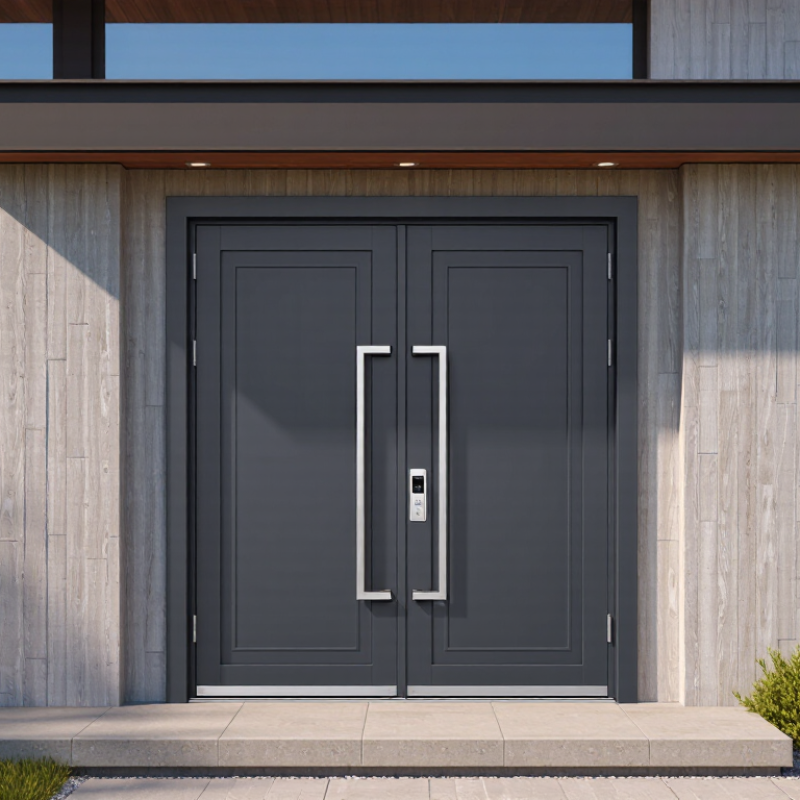
Top Premium Aluminum Entry Door Suppliers Worldwide

Market Definition and Key Features of Premium Aluminum Entry Doors

Premium aluminum entry doors occupy the high-performance segment of the architectural door market. They typically combine thermally broken aluminum frames, insulated panels, multi-point locking, weather seals, and custom glazing.

The market boundary is not perfectly clean. Some suppliers classify luxury appearance as premium, while technical buyers require tested thermal, air, water, and security performance.

Demand is linked to energy renovation and durable construction. The United Nations Environment Programme reported that buildings consumed about 30% of global final energy in 2022 and generated roughly 26% of energy-related emissions.

This strengthens the case for thermally improved entrance systems. A well-designed thermal break reduces heat transfer through the frame. However, a low U-value alone proves little. Installation quality, glass selection, drainage, and perimeter sealing can change real performance.

Premium products also emphasize narrow sightlines, powder-coated finishes, corrosion resistance, accessible thresholds, and concealed hardware. These features support both visual design and daily reliability.

Industry testing commonly references standards for air infiltration, water penetration, wind load, and forced-entry resistance. Independent certification matters more than attractive brochures.

The International Energy Agency continues to identify building efficiency as a major route to lower energy demand, yet embodied aluminum impacts deserve attention. Recycled content, repairable components, and documented material sourcing are increasingly relevant purchasing criteria.

The market remains fragmented, and supplier claims still require careful verification.

Global Criteria for Evaluating Aluminum Entry Door Suppliers

Top Premium Aluminum Entry Door Suppliers Worldwide

Global buyers should assess suppliers through verified performance, not polished brochures. The International Aluminium Institute reported an average carbon intensity of about 16.6 tonnes of CO2e per tonne of primary aluminium in its 2021 baseline. Therefore, suppliers should disclose recycled content, smelting sources, and product-level environmental declarations.

A reliable supplier provides test results for air leakage, water resistance, wind pressure, thermal transmittance, and repeated operation. European standards EN 12207, EN 12208, and EN 12210 offer useful comparison points across markets. For thermal performance, request the complete door U-value, not only the insulated panel value. Installation quality matters too. A high-performing door can fail through poor sealing around the frame. In my experience reviewing specifications, small details often reveal large quality gaps. A beautiful finish may still conceal weak drainage or limited hardware testing.

Tips: Ask for recent, third-party reports. Check test sizes and climate conditions. Confirm warranty coverage, spare parts, and service response times. The International Energy Agency identifies aluminium as an energy-intensive sector, so credible suppliers should explain their reduction plans. Do not treat a sustainability certificate as proof of product durability. That assumption needs more scrutiny. Require batch traceability, salt-spray results, and clear maintenance instructions before comparing prices.

Top Premium Aluminum Entry Door Suppliers Worldwide – Global Criteria for Evaluating Aluminum Entry Door Suppliers
Evaluation Dimension What to Measure Premium-Supplier Benchmark Recommended Verification Evidence Suggested Weight
Product Engineering Frame design, thermal breaks, corner construction, drainage, threshold design, and compatibility with insulated glazing. A documented system design with repeatable assembly details, engineered drainage paths, and thermally improved frame options. Technical drawings, section details, engineering specifications, and independently reviewed product data. 15%
Thermal Performance Whole-door U-value or U-factor, frame conductivity, glass specification, and air leakage performance. Published test results for the complete door assembly; lower U-values indicate better insulation. Compare values using the same unit and test method. Laboratory reports, declared performance documents, glazing data, and test conditions based on recognized regional standards. 15%
Weather Resistance Resistance to air infiltration, water penetration, wind loading, and repeated opening and closing. Tested performance for the intended climate and building exposure, with no unexplained gaps between laboratory and field specifications. Air, water, and structural test reports; installation manuals; and project-specific performance classifications where applicable. 12%
Materials and Finish Quality Aluminum alloy and temper, coating system, surface preparation, color consistency, and resistance to corrosion and ultraviolet exposure. Clearly identified aluminum specifications and a controlled coating process suitable for the project’s exposure category. Material certificates, coating specifications, sample panels, color-control procedures, and corrosion or weathering test results. 12%
Security and Hardware Multi-point locking, cylinder compatibility, hinge capacity, impact resistance, and resistance to unauthorized manipulation. Hardware is matched to the door weight and usage cycle, with tested security performance appropriate for residential or commercial applications. Hardware schedules, cycle-test records, security test reports, cylinder data, and maintenance instructions. 10%
Standards and Compliance Compliance with applicable building, energy, fire, safety, accessibility, and glazing requirements in the destination market. Current, traceable compliance documentation for the exact configuration being quoted rather than for a visually similar model. Declarations of performance, conformity documentation, accredited test reports, and local code review records. 10%
Manufacturing Quality Control Incoming-material inspection, dimensional control, process inspection, final inspection, traceability, and nonconformance handling. Documented quality procedures with measurable inspection points and corrective-action records. Quality manual, inspection checklists, batch records, calibration certificates, audit results, and sample inspection reports. 10%
Customization Capability Available sizes, configurations, glazing options, thresholds, hardware, finishes, swing direction, and project-specific detailing. A controlled customization process that confirms structural, thermal, hardware, and installation compatibility before production. Approved shop drawings, configuration sheets, engineering-change procedures, and representative custom-project records. 8%
Supply Capacity and Lead Time Monthly production capacity, standard and custom lead times, material availability, capacity planning, and order visibility. Lead times are stated in writing, separated into approval, production, and shipping stages, with contingency planning for critical components. Production schedule, capacity statement, order-status process, historical delivery records, and escalation contacts. 6%
Packaging and International Logistics Protection against abrasion, moisture, impact, distortion, and glass damage during handling and long-distance transport. Packaging is designed for the shipment mode and includes clear identification, handling instructions, and component protection. Packaging specifications, loading photographs, shipping marks, container plans, and damage-claim procedures. 4%
Installation and Technical Support Installation manuals, site guidance, tolerances, adjustment procedures, training, spare parts, and response time. Clear installation documentation and defined technical support before, during, and after project delivery. Installation guides, method statements, training records, service-level commitments, and spare-parts lists. 4%
Warranty and Lifecycle Value Warranty scope, exclusions, finish coverage, hardware coverage, expected service requirements, and replacement-part availability. Warranty terms are specific to the complete door assembly and supported by a practical process for claims and replacement components. Written warranty, maintenance schedule, service contacts, claims procedure, and lifecycle-cost estimate. 4%
Evaluation note: Compare suppliers using the same door size, glazing build-up, threshold type, test method, destination climate, and installation conditions. Weighted percentages are a practical screening framework and should be adjusted to project priorities.

Leading Premium Aluminum Entry Door Suppliers by Region

Premium aluminum entry door suppliers differ by region because climate, construction methods, and buyer expectations vary. In Europe, established fabricators often emphasize slim sightlines, thermal breaks, and precise hardware integration. Ask for tested performance data, not just attractive finish samples. Small details matter.

North American suppliers commonly offer broader customization for residential and commercial openings. Confirm that quoted dimensions, glazing, and thresholds match the project drawings. A door that looks substantial in a showroom may behave differently under wind or heavy daily use. Request installation guidance and clear warranty terms before comparing prices.

Across Asia-Pacific, supplier capabilities range from high-volume manufacturing to project-specific fabrication. Review coating options, corrosion resistance, and packaging for long-distance transport.

In the Middle East, heat, dust, and intense sunlight make seals and durable finishes especially relevant. Regional strengths are not guarantees.

Some suppliers provide excellent technical documentation but limited local service; others respond quickly yet offer fewer finish choices. Comparing verified test reports, sample assemblies, lead times, and after-sales support gives buyers a more grounded view than relying on regional reputation alone.

Product Quality, Customization, Certifications, and Performance

Premium aluminum entry door suppliers are judged by more than polished photographs. Product quality begins with consistent alloy composition, accurate profiles, strong corner joints, and stable hardware. In practical inspections, I check weld marks, gasket compression, drainage paths, and surface finish under direct light. Tiny gaps often reveal larger production problems. Thermal breaks should be continuous, not decorative inserts. Powder coating must resist fading, abrasion, and coastal humidity.

Customization should solve site conditions, not create visual complexity. Reliable suppliers can adjust door height, frame depth, glazing type, opening direction, threshold design, and security hardware. They should provide measured drawings before production. Samples are useful, but full-size mock-ups expose weaknesses sooner. Oversized doors may look impressive. They can also strain hinges and rollers if engineering is incomplete.

Certifications add value when they match the destination market and actual product configuration. Ask for current test reports covering air leakage, water resistance, wind pressure, thermal performance, and acoustic control. Documentation should identify materials, test methods, dates, and laboratory details. Performance depends on installation as much as factory quality. A well-tested door can still fail with poor anchoring or uneven masonry. Experienced suppliers offer installation guidance, traceable inspections, packaging records, and realistic warranty terms. No supplier gets everything perfect. The most dependable teams admit limitations, explain maintenance needs, and revise details when field feedback proves them wrong.

Purchasing Considerations, Pricing Factors, and Supplier Selection

Choosing a premium aluminum entry door supplier starts with the project conditions, not the catalog. Record the rough opening, wall depth, exposure to rain, and expected daily use. Ask for frame and panel specifications, thermal performance data, finish options, hardware details, and written warranty terms. A door facing strong afternoon sun may need a different finish than one under a deep porch. Small details matter.

Pricing depends on more than door size. Alloy and profile thickness, thermal breaks, glazing, finish quality, locksets, custom dimensions, crating, and delivery can all change the quote. Compare itemized proposals with matching specifications. A lower price may exclude installation, trim, or freight. Ask how the supplier handles measurement errors, transit damage, and replacement parts. These questions can feel fussy, but they prevent expensive surprises.

Tips: Request a recent project reference with similar climate and opening dimensions. Confirm lead time in writing, and ask whether quoted delivery dates include production and shipping. Inspect finish samples in natural light; screens can misrepresent color. Keep a small contingency for site adjustments. Even a well-planned order can miss something, so review every measurement before approval.

FAQS

What features usually define a premium aluminum entry door?

It commonly uses a thermally broken frame, insulated panels, weather seals, and multi-point locking. Custom glazing is also common. Narrow sightlines and concealed hardware may improve appearance.

Why does thermal performance matter for an aluminum entry door?

A thermal break reduces heat transfer through the frame. This can support lower energy use. However, a low U-value alone proves little.

What installation details can change real-world performance?

Glass selection, drainage, perimeter sealing, and installation accuracy all matter. A small gap near the threshold can admit air or water. The door may perform below its tested rating.

How should buyers compare suppliers from different regions?

Compare verified test reports, sample assemblies, lead times, and local support. Regional reputation is not enough. Some suppliers document well but provide limited service.

What project details should buyers record before requesting quotes?

Record the rough opening, wall depth, weather exposure, and expected daily use. Note whether the door faces strong afternoon sunlight. These details affect specifications and finishes.

Which factors can increase the final price?

Profile thickness, glazing, thermal breaks, finishes, hardware, and custom dimensions affect pricing. Crating and delivery can add significant costs. Installation or trim may appear separately.

How can buyers avoid misleading price comparisons?

Request itemized proposals with matching specifications. Check whether freight, installation, trim, and replacement parts are included. A cheaper quote may simply omit important work.

What should buyers check before approving an order?

Confirm measurements, written lead times, warranty terms, and delivery responsibilities. Inspect finish samples in natural light. Screens can misrepresent color.

What common mistake deserves more attention?

Buyers may focus too heavily on appearance or U-values. Daily use, drainage, sealing, and repair support can matter just as much. Even careful planning can miss something.

Conclusion

Premium Aluminum Entry Door systems combine refined appearance, strength, and dependable performance for residential and commercial buildings. This overview explains their defining features, including durable aluminum construction, weather resistance, thermal efficiency, security options, and design flexibility. It also outlines practical criteria for comparing suppliers worldwide, such as manufacturing consistency, material specifications, customization capabilities, product testing, certifications, warranty terms, and after-sales support.

Supplier options vary by region, production capacity, design expertise, and delivery capabilities. Buyers should assess finishes, dimensions, glazing, hardware, insulation, and accessibility requirements alongside project timelines and installation needs. Pricing may be influenced by door size, configuration, surface treatment, performance ratings, shipping, and customization. By weighing these factors against documented quality and service, purchasers can make an informed supplier selection that balances budget, appearance, durability, and long-term value.

Ethan

Ethan

Ethan is a professional marketing specialist dedicated to helping customers better understand the value, quality, and practical applications of the company’s products. With a strong understanding of product development, market trends, customer needs, and digital communication, he creates clear,......