European Standard
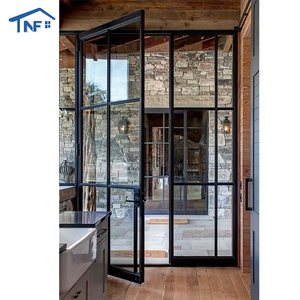
Engineered in Foshan for high-end residential luxury villas, commercial developments, and hospitality entrances worldwide. Compliant with international impact, wind pressure, and thermal insulation standards.
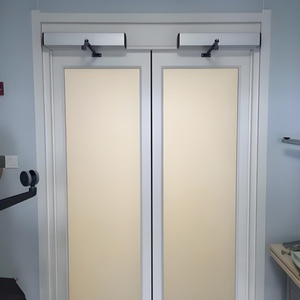
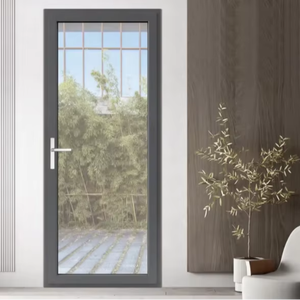
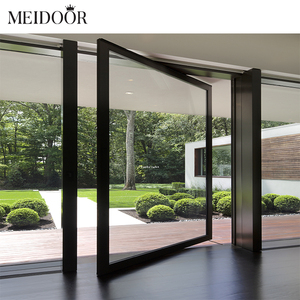
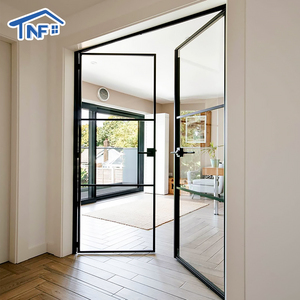
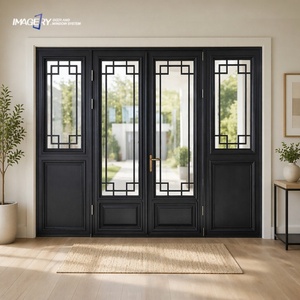
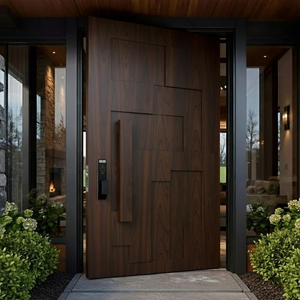
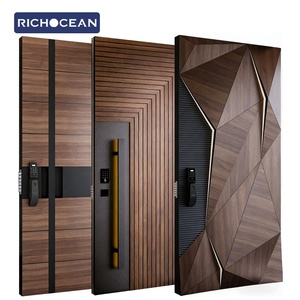
When global real estate developers, facade engineers, building material importers, and commercial contractors evaluate China wholesale tempered glass entry door factories, the decision extends far beyond aesthetic appeal. An exterior front entry door serves as the primary structural interface of a building. It must withstand extreme differential atmospheric pressures, satisfy rigorous thermal transmittance parameters (U-factor/SHGC), resist mechanical impact, and maintain structural integrity across decades of continuous high-frequency cycles.
Standard glass exhibits low tensile strength under thermal shock and mechanical deflection. China’s leading OEM/ODM entry door manufacturers employ controlled thermal tempering. Float glass is heated past its softening point to approximately 620°C (1,148°F) and rapidly quenched with high-pressure air jets. This induces intense compressive stresses on the outer surfaces (exceeding 69 MPa / 10,000 psi) while maintaining interior tensile force.
To mitigate the rare risk of spontaneous breakage caused by Nickel Sulfide (NiS) inclusions in raw float glass, tier-1 Chinese factories conduct mandatory Heat Soak Testing (HST) according to EN 14179-1. Glass panels undergo accelerated thermal cycling at 290°C for several hours, forcing contaminated sheets to fracture inside the factory oven rather than post-installation on an overseas project site.
The mechanical backbone of modern glass entry doors lies in the extruded profile engineering. Premium factory offerings feature multi-cavity thermal break aluminum profiles integrated with imported Polyamide (PA66 GF25) glass-fiber reinforced insulation strips. This mechanical join structurally isolates the exterior aluminum section exposed to outdoor weather from the interior section, eliminating thermal bridging.
For high-traffic commercial entrances (such as hotel lobbies, luxury retail boutiques, and corporate headquarters) or large-format residential pivot doors spanning heights up to 4 meters, standard hinges fail under shear load. Modern Chinese engineering utilizes heavy-duty hydraulic floor springs and concealed German-engineered pivot systems capable of supporting glass leaf weights exceeding 500 kg (1,100 lbs) with smooth axial motion and automatic soft-closing control.
The global building envelope market is undergoing a seismic transition driven by net-zero carbon mandates, smart building integration, and minimalist architectural aesthetics. B2B importers sourcing from Chinese door factories are increasingly prioritizing four macro technological trends:
Understanding the thermal and acoustic differences between entry door glazing options empowers procurement officers to specify the correct configuration based on regional climate zones:
| Glazing Specification | U-Factor (BTU/h·ft²·°F) | SHGC Range | Sound Isolation (STC) | Ideal Application Environment |
|---|---|---|---|---|
| 6mm + 12Ar + 6mm Toughened Clear IGU | 0.42 – 0.48 | 0.65 – 0.72 | 31 dB – 34 dB | Moderate temperate climates, light commercial storefronts |
| 6mm Double Low-E + 16Ar + 6mm Tempered | 0.24 – 0.28 | 0.28 – 0.38 | 35 dB – 38 dB | High solar radiation / tropical coastal zones & warm regions |
| 8mm Low-E + 12Ar + 6mm + 1.52PVB + 6mm Laminated | 0.19 – 0.22 | 0.22 – 0.30 | 42 dB – 46 dB | Extreme hurricane zones, high-security residential luxury villas |
| Triple Glazed Vacuum Low-E Tempered Unit | 0.12 – 0.16 | 0.20 – 0.26 | 45 dB + | Passive House certified buildings, extreme cold Northern climates |
Based in Foshan, Guangdong Province—the global epicenter of architectural aluminum manufacturing—Guangdong Derki Doors & Windows Technology Co., Ltd. (DERKI Entry Door) represents over 25 years of continuous research, engineering design, and large-scale manufacturing excellence.
Operating from an expansive 180,000 square meter smart production facility supported by over 600 skilled technicians, engineers, and CAD detailers, DERKI serves as a vertically integrated one-stop factory for overseas importers, developers, and trade buyers.
Comprehensive answers to common technical, shipping, and quality assurance queries raised by international architectural buyers, importers, and project engineers.
China wholesale manufacturers like DERKI produce a wide variety of architectural entry door systems. Key categories include large-format hydraulic aluminum pivot doors, French double swing casement entry doors, thermal break glass patio doors, stainless steel armored glass doors, cast aluminum luxury villa entrance gates, and fire-rated commercial glass doors for hotel lobbies and office towers.
Overseas sea freight subjects cargo to dynamic container motion, humidity changes, and port handling stress. DERKI employs export-grade protective packaging: glass panels receive PE protective wrap, aluminum edges are fitted with corner guards, frames are wrapped in waterproof moisture-proof foam, and completed door units are enclosed inside custom fumigated solid plywood or steel-frame crates equipped with internal rubber vibration dampers.
Standard tempered glass undergoes thermal quenching to increase strength but retains a minuscule risk (< 0.3%) of spontaneous explosion caused by microscopic Nickel Sulfide (NiS) inclusions. Heat-Soaked Tempered Glass (HST) undergoes a secondary 4 to 8 hour thermal stress test at 290°C inside a specialized factory oven. This forces any unstable glass sheets to shatter during manufacturing, guaranteeing 100% stable, hazard-free glass panels for overseas installation.
Australian building standard AS2047 evaluates window and door performance across three critical metrics: deflection resistance, air infiltration, and water penetration under high pressure. DERKI entry doors achieve the highest rating—N6 (structural wind pressure up to 4500 Pascals)—by utilizing high-wall-thickness 6063-T6 aluminum profiles, multi-cavity EPDM double compression gaskets, structural silicone bonding, and heavy-duty locking points.
Yes. OEM/ODM custom production allows direct pre-engineering for smart hardware. Door stiles can be CNC-machined to house motorized multi-point mortise locks (such as German Dormakaba, GU, or customized electronic systems), concealed wiring conduits through pivot axes, electric strike plates, fingerprint sensors, keypads, and smart video intercom interfaces.
For cold northern regions or coastal salt-spray locations, we recommend 70mm to 90mm profile depths equipped with 24mm to 34mm Polyamide (PA66 GF25) thermal insulation strips, paired with triple glazed Low-E Argon units (e.g., 6mm Low-E + 12Ar + 6mm Clear + 12Ar + 6mm Low-E). Aluminum frames receive high-grade AkzoNobel PVDF fluorocarbon coatings or anodized finishes to resist coastal salt-air corrosion.
Upon receiving project architectural elevations or door schedules, DERKI's engineering department returns fully detailed CAD shop drawings within 24 to 48 hours for client review. Once CAD drawings and finish samples are approved, standard production lead time is 25 to 35 days, depending on glass processing requirements and custom hardware integration.
Foshan possesses the world's most concentrated architectural aluminum and glass manufacturing ecosystem. Access to raw high-purity aluminum ingots, specialized CNC machinery factories, glass tempering kilns, and hardware hardware suppliers allows Foshan factories like DERKI to offer superior structural quality, rigorous compliance testing, and competitive wholesale pricing unmatched by smaller regional hubs.
Request factory-direct wholesale pricing, submit your architectural project drawings, or request technical product catalogs from Guangdong Derki Doors & Windows Technology Co., Ltd.