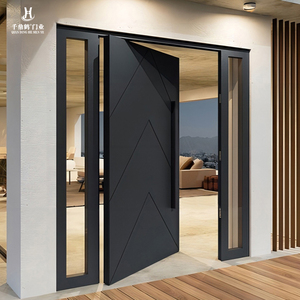
Featured OEM Collections
Thermal Insulated Aluminum Door Systems
Explore our precision-engineered entrance doors built with multi-chamber thermal breaks, high-security multi-point locking systems, and customizable architectural finishes.
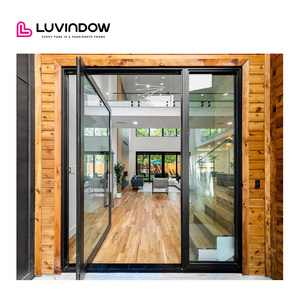
Modern Pivot Aluminum Door Glass Front Villa Entry US Made Thermal Break Energy Efficient
Customized Modern Luxury SY Entry Door Forged Glass Steel with Pivot Opening Matt Black Swing French Style Villa Interior Use
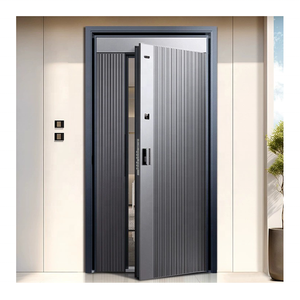
SJUMBO Customization Modern Commercial Security Double-Layer Aluminium Swing Exterior Entrance Smart Door
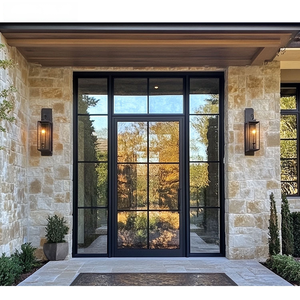
XIYATECH Modern Design Anti-theft French Front House China American Exterior Door Main Entrance Entry Metal Wrought Iron Doors
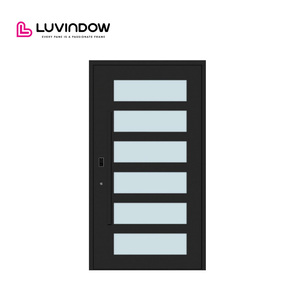
Secure Large Opening Aluminum Entry Pivot Doors for High End North American Residential Communities
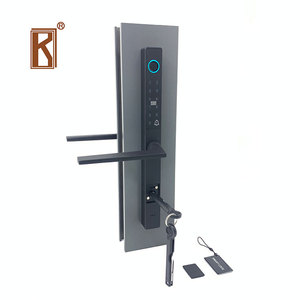
Ultra Narrow Frame Broken Bridge Aluminum Fingerprint Smart Lock, 4-in-1 Password Card Key Digital Lock for Casement Door
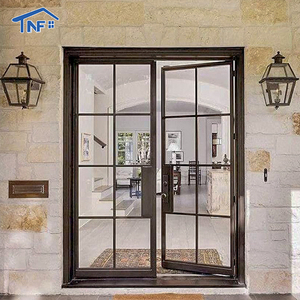
Customized Design Modern Thermal Insulation Villa Casement Glass Aluminum Door with French Door Style and SDL Grill Design
World-Class OEM Manufacturing
Guangdong Derki Doors & Windows Technology Co., Ltd.
Based in Foshan — China’s global capital of architectural aluminum extrusion — DERKI brings over 25 years of engineering experience to original equipment manufacturers (OEM) and custom project developers worldwide.
Vertical OEM/ODM Supply Chain Integration
From raw 6063-T6 aluminum billet extrusion, automated anodizing, and fluorocarbon powder coating (AAMA 2605) to CNC machining and glass assembly, our vertically integrated facilities reduce turnaround times by 35% while maintaining absolute tolerances.
Rigorous International Certifications
Every door system is certified to exceed global structural and environmental codes, holding official CE markings, ISO 9001 quality management standards, AS2047 (N6 cyclone wind-load rating up to 6000 Pa), and UL positive-pressure fire-rated compliances.
Bespoke CAD/BIM Engineering Support
Our dedicated technical team provides free parametric CAD shop drawings and Revit BIM models within 24 hours of receiving door schedules, guaranteeing exact structural alignment for custom pivot, hinged, and multi-track entrance designs.
Engineering Whitepaper
The Physics of Thermal Insulation in Architectural Aluminum Doors
A technical analysis of Polyamide thermal breaks, double-to-triple glazed argon assemblies, and mechanical weatherproofing against extreme thermal bridge conduction.
1. Multi-Chamber Polyamide (PA66 GF25) Thermal Break Technology
Raw aluminum possesses high thermal conductivity ($k \approx 200 \text{ W/m}\cdot\text{K}$), making uninsulated frames severe thermal bridges that cause energy loss and internal condensation. DERKI’s OEM thermal door systems utilize precision-inserted **PA66 GF25 polyamide strips** (polyamide 66 reinforced with 25% glass fiber).
This composite material drops thermal conductivity to just $0.3 \text{ W/m}\cdot\text{K}$ — a 660-fold reduction. By creating a structural "broken bridge" inside the multi-chamber profile, we achieve low overall frame thermal transmittance ($U_f \le 1.3 \text{ W/m}^2\cdot\text{K}$), keeping internal spaces warm in arctic conditions and cool in tropical desert heat.
Key Engineering Advantage: Structural Shear Resistance
The 25% glass fiber reinforcement matches the mechanical expansion coefficient ($\alpha = 2.3 \times 10^{-5}/\text{K}$) of 6063-T6 aluminum, preventing strip delamination under extreme thermal cycling between -40°C and +80°C.
2. Insulated Glass Unit (IGU) & Acoustic Barrier Integration
Glazing accounts for up to 80% of an entrance door's surface area. DERKI integrates custom double and triple-pane IGU configurations featuring Low-Emissivity (Low-E) coatings and 90%+ Argon gas fill.
Our standard specification incorporates dual-seal structural silicone with warm-edge composite spacers (e.g., Technoform or Swisspacer), which eliminates edge condensation and lowers total door U-values ($U_w$) down to Passive House thresholds ($U_w \le 0.8 \text{ W/m}^2\cdot\text{K}$).
Furthermore, asymmetric glass panel thicknesses (e.g., 8mm tempered + 16Ar + 6mm acoustic laminated) disrupt acoustic wave propagation, delivering Sound Transmission Class (STC) ratings up to 45 dB for luxury urban residences and high-traffic hospitality entrances.
OEM Thermal & Structural Performance Standard Matrix
| Performance Indicator | Standard Aluminum Door | DERKI Commercial Thermal Break | DERKI Ultra-Performance Passive Series |
|---|---|---|---|
| Frame U-Value ($U_f$) | $5.8 \text{ W/m}^2\cdot\text{K}$ | $1.8 - 2.2 \text{ W/m}^2\cdot\text{K}$ | $1.0 - 1.3 \text{ W/m}^2\cdot\text{K}$ |
| Overall Door U-Value ($U_w$) | $4.5 \text{ W/m}^2\cdot\text{K}$ | $1.4 - 1.7 \text{ W/m}^2\cdot\text{K}$ | $\le 0.85 \text{ W/m}^2\cdot\text{K}$ |
| Acoustic Rating (STC / OITC) | 28 dB / 24 OITC | 38 dB / 34 OITC | 45 dB / 40 OITC |
| Air Infiltration (ASTM E283) | Level 2 ($1.5 \text{ m}^3/\text{m}\cdot\text{h}$) | Level 4 ($0.5 \text{ m}^3/\text{m}\cdot\text{h}$) | Class A1 ($\le 0.1 \text{ m}^3/\text{m}\cdot\text{h}$) |
| Structural Wind Load (AS2047 / ASTM E330) | 2000 Pa | 4500 Pa | 6000 Pa (N6 Rating) |
| Water Penetration (ASTM E331) | 250 Pa | 600 Pa | 900 Pa static head |
Strategic Industry Insights
Future Procurement Trends for Architectural Door Systems (2025–2030)
How evolving carbon mandates, smart building integration, and minimalist architectural aesthetics are reshaping the global procurement landscape for door manufacturers and B2B buyers.
1. Extreme Climate Resilience & Net-Zero Compliance
Global building codes (such as ASHRAE 90.1, Title 24 in California, and Europe's EPBD) now demand unprecedented thermal performance. Importers and commercial contractors are increasingly shifting away from non-thermal profiles toward **Polyamide broken bridge aluminum systems** with verified Environmental Product Declarations (EPD) to qualify for LEED v4 and BREEAM certifications.
2. Embedded Biometric & Smart Access Controls
The modern entry door is no longer just a physical barrier—it is an intelligent access point. DERKI’s OEM engineering integrates hidden electromagnetic multi-point locks, 3D facial recognition sensors, fingerprint biometrics, and motorized automatic opening arms directly inside the ultra-narrow aluminum frame profiles without compromising thermal or structural integrity.
3. Oversized Pivot Systems with Ultra-Narrow Sightlines
Luxury residential architecture is driving demand for expansive entrance openings exceeding 4 meters in height and 2 meters in width. DERKI’s custom pivot hardware supports panel loads up to 500 kg (1100 lbs) with fluid 360-degree rotational balance, concealed floor springs, and perimeter hydraulic dampening, allowing architects to achieve dramatic grand entrances.
Buyer Knowledge Base
Frequently Asked Questions (FAQ) for OEM Sourcing
Detailed technical answers for importers, developers, architects, and general contractors sourcing thermal aluminum entrance systems.
What technical specifications differentiate DERKI’s thermal aluminum doors from standard commercial aluminum doors?
Standard commercial aluminum doors feature unreinforced, single-extrusion profiles that act as direct conductors of heat and cold. DERKI’s thermal doors integrate a structural multi-chamber design separated by high-grade Polyamide PA66 GF25 thermal break strips. Furthermore, our doors employ triple-seal continuous EPDM weather gaskets, warm-edge glass spacers, and optional polyurethane thermal foam cores inside the aluminum extrusion chambers. This reduces thermal conductivity by over 80% and prevents frame condensation in harsh climates.
Can DERKI accommodate custom OEM profile extrusion designs and custom hardware branding?
Yes. As a direct manufacturer with an in-house tooling workshop, we manufacture custom aluminum extrusion dies, specialized panel patterns, and proprietary hardware integrations. We offer full original equipment manufacturer (OEM) services, including laser-etched custom logos on hinges, customized packaging crates, and white-label architectural CAD shop drawing submittals tailored to your project brand.
What surface treatments are available for coastal or high-corrosion environments?
For coastal applications exposed to high salt spray and atmospheric humidity, we recommend our Fluorocarbon PVDF Powder Coating (AAMA 2605 compliant) or 25-micron anodic oxidation finishes. These coatings are salt-spray tested (ASTM B117) for over 3,000 continuous hours without corrosion, chalking, or color fading, backed by a 20-year surface durability guarantee.
How do you ensure zero transit damage during international ocean freight shipping?
Every door panel is wrapped in 100-micron anti-scratch PE protective film, fitted with impact-resistant heavy-duty plastic corner guards, wrapped in bubble cushioning, and sealed within fully enclosed, fumigated ISPM-15 plywood crates. Crates are engineered with internal steel banding and bottom forklift channels to allow safe loading, unloading, and container transport worldwide.
What building certifications and test documentation can DERKI supply for local project approval?
We provide full structural and environmental submittal packages, including CE certifications (EN 14351-1), AS2047 (N6 wind pressure rating up to 6000 Pa) test reports from accredited laboratories, ISO 9001 factory audits, and UL fire-rating certificates for commercial fire-door assemblies. Our engineering team supplies stamped calculation sheets for wind pressure, water tightness, air infiltration, and overall U-factor performance upon project booking.
What is the standard production lead time for custom OEM door orders?
Standard lead time for custom OEM door orders is 25 to 35 calendar days following CAD shop drawing approval and deposit receipt. For specialized custom extrusion dies or complex 3D cast-aluminum relief panels, an additional 10 to 15 days is allocated for initial tooling creation and prototype sampling.
Accelerate Your Project with Custom OEM Thermal Aluminum Solutions
Connect directly with our engineering team in Foshan. Submit your door schedules or project elevations to receive detailed pricing, thermal performance calculations, and free CAD shop drawings within 24 hours.