Evaluating Global OEM Factories for High-Performance Insulated Front Doors
In modern residential and commercial architecture, the entrance door has evolved from a basic security barrier into an engineered envelope component responsible for thermal isolation, acoustic attenuation, and architectural prestige.
The Shift Toward Thermal Break Aluminum Entrance Systems
Global building energy codes—such as Europe's EN ISO 10077 standards, North America's NFRC guidelines, and Australia's NCC code—now require strict thermal insulation metrics (U-values below 1.5 W/m²K for residential envelope openings). Traditional solid timber doors suffer from moisture warping, while non-insulated steel doors exhibit massive thermal bridging, leading to interior condensation and energy waste.
Top-tier insulated aluminum front door manufacturers solve these trade-offs by combining high-precision extruded 6063-T6 aluminum profiles with Polyamide PA66 GF25 thermal break strips and high-density polyurethane (PU) foam cores. When vetting OEM factories, engineering teams must evaluate structural wind load resistance (DP ratings), weatherproofing seal systems, anodizing/powder-coating durability (Qualicoat standards), and international certification compliance.
Key Audit Criteria for Procurement Directors:
- Thermal Core Tech: Injection of high-density PU foam (≥45 kg/m³) with PA66 thermal breaks.
- Structural Integrity: Minimum 2.0mm to 3.0mm profile wall thickness for heavy pivot & swing configurations.
- Air & Water Tightness: EPDM continuous gaskets with multi-point perimeter compression locking.
- Surface Finishes: Fluorocarbon (PVDF) or powder coating resistant to salt spray test (AAMA 2605 / ISO 9227).
Top 8 Insulated & Thermal Break Aluminum Front Doors
Explore our flagship series manufactured at our Guangdong Foshan base, featuring custom sizes, advanced glazing, multi-point lock hardware, and extreme thermal weatherproofing.
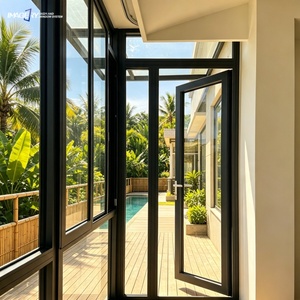
Modern Aluminium Casement Swing Door Triple Glazed Glass for Balcony Patio Front Entry Residential
Engineered with high-transmittance Low-E triple glazing, acoustic dampening seals, and thermal break profiles designed for residential balcony and main entry transitions.
Contact Us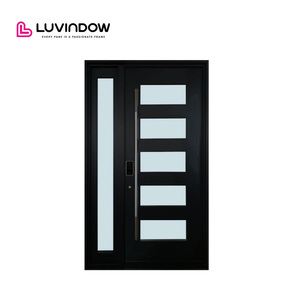
Energy Efficient Insulated Glass Weatherproof Aluminum Pivot Door for North American Custom Homes
Heavy-duty hydraulic pivot hinge supporting oversized openings up to 4 meters high. Features insulated glass inserts and severe wind-load resistance for luxury custom residences.
Contact Us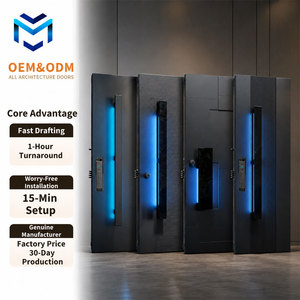
American Soundproof Front Entry Main Exterior Interior Doors Cast Aluminum Security Entrance Steel Pivot Doors With Blue Light
Combines solid cast aluminum armor plating with integrated ambient ambient blue LED architecture light strips, offering anti-theft security and supreme soundproofing (STC 42+ dB).
Contact Us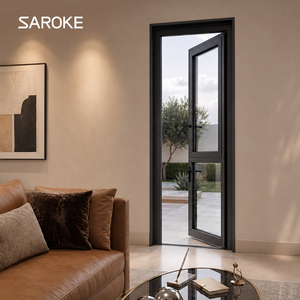
American Standard House Black Metal Patio Exterior Thermal Break Aluminum Doors And Windows
Designed according to North American architectural building codes. Sleek matte black anodized profiles with PA66 thermal barrier, delivering zero-condensation performance.
Contact Us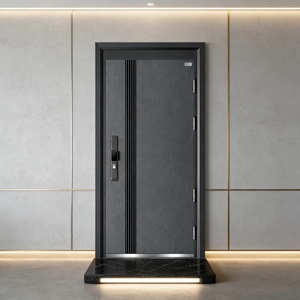
Customizable Aluminum Entry Doors Factory Direct Wholesale Price Modern Residential Front Security Door Designs
Versatile OEM customizable front entry system. Choice of surface patterns, wood grain transfers, and multi-point smart biometric locks for housing development projects.
Contact Us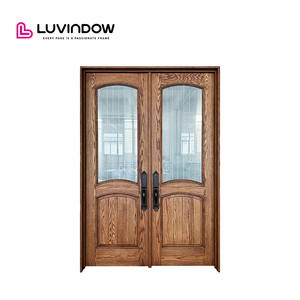
Modern Solid Wood Entry Front Door with Custom Carving and Low-E Double Tempered Glass for Apartment & Exterior Use
Combines the natural aesthetic warmth of interior solid timber with an exterior structural aluminum protective shell, backed by Low-E double tempered glass vision panels.
Contact Us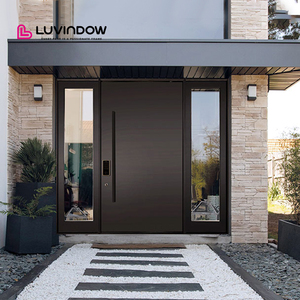
Modern Design Villas Black Profile Aluminum Frame Front Entry Pivoting Doors For Houses
Architectural grand entry door system with concealed floor spring, continuous acoustic perimeter seals, and ultra-narrow sightlines for high-end luxury residential villas.
Contact Us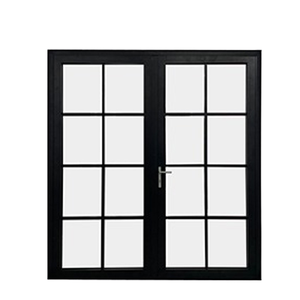
OEM Custom 2026 French Double Doors Double Swing Black Aluminum Grid Clear Glass Garden Patio Villa Thermal Fire Rated CE NFRC
Classic French swing entrance profile integrated with modern thermal break insulation, fire-rated core options, and architectural grid mullions for commercial and residential estates.
Contact UsInsulated Aluminum vs. Alternative Front Door Materials
Compare thermal performance, structural durability, sound reduction, and maintenance lifecycles across major exterior door materials.
| Performance Indicator | Thermal Break Aluminum | Solid Cast Aluminum | Solid Hardwood | Hollow Core Steel |
|---|---|---|---|---|
| U-Factor (W/m²K) | 0.9 - 1.4 (Superior) | 1.8 - 2.2 (Moderate) | 1.6 - 2.0 (Fair) | 2.4 - 3.2 (Poor) |
| Sound Insulation (STC) | 38 - 45 dB | 35 - 40 dB | 30 - 35 dB | 25 - 30 dB |
| Wind Pressure (Pa) | ≥ 5000 Pa (AS2047 N6) | ≥ 4500 Pa | ≥ 2500 Pa | ≥ 3000 Pa |
| Coastal Salt Spray Resistance | C5 Grade (Qualicoat 2) | C5 Grade | Low (Rots/Swells) | Low (Rust Risks) |
| Maintenance Cycle | 25+ Years (Zero Maintenance) | 25+ Years | Re-varnish every 2 years | Repaint every 5 years |
| Dimensional Stability | 100% Warp-Proof | 100% Warp-Proof | Prone to Swelling | Thermal Expansion Risk |
The Engineering Inside High-Gain Insulated Entrance Systems
How leading Chinese OEM factories achieve passive-house level U-values through multi-chamber profiles, composite thermal breaks, and specialized infill materials.
PA66 GF25 Polyamide Strips
Unlike cheap PVC thermal breaks that degrade under UV heat, top factories use Polyamide PA66 reinforced with 25% glass fiber. This matches the thermal expansion rate of aluminum, preventing structural delamination while severing heat transfer pathways between exterior and interior profile faces.
High-Density PU Foam Cores
The interior cavity of flush aluminum leaf panels is injected with eco-friendly closed-cell Polyurethane (PU) foam with densities reaching 45–50 kg/m³. This high-density core blocks acoustic vibrations and drastically lowers convective thermal flow within the door panel body.
Triple EPDM Perimeter Gaskets
Air filtration is eliminated via continuous automotive-grade EPDM weatherstripping. Dual outer compression bulbs combine with a central magnetic thermal seal, creating an airtight barrier capable of passing ASTM E283 air infiltration and ASTM E331 water penetration tests.
Key Procurement Trends in Insulated Front Door Manufacturing
What global architectural specifiers, real estate developers, and door importers must prepare for over the next 5 years.
Smart Biometric & Motorized Heavy Pivot Systems
Architects are demanding grand entry doors exceeding 3 meters in height and 1.5 meters in width. To facilitate effortless operation of panels weighing upwards of 300 kg, factories are integrating heavy-duty hydraulic floor pivots with motorized multi-point locks that sync with facial recognition, fingerprint access, and smart home IoT networks.
Zero-Carbon & Passive House Compliance (U ≤ 0.8)
Driven by strict European Green Deal initiatives and North America's revised Energy Star 7.0 standards, procurement demands are shifting toward ultra-insulated front entrance doors. Advanced factories are pairing vacuum insulated panels (VIP) with quad-glazed Low-E units to meet Passive House U-value thresholds below 0.8 W/m²K.
Surface Texture Innovation: 3D Cast & Ceramic Veneers
Modern luxury buyers are turning away from flat powder finishes. Market growth is heavily weighted toward 3D relief cast aluminum designs, fluorocarbon metallic patinas, real stone veneer overlays bonded to aluminum substrate panels, and hyper-realistic anti-scratch wood grain powder coatings.
Supply Chain Digitalization & BIM CAD Integration
B2B importers and general contractors now prioritize factories offering complete digital engineering support. Factories that supply free 3D Revit BIM models, structural load calculations, and fast turn-around custom shop drawings win a larger share of international commercial tenders.
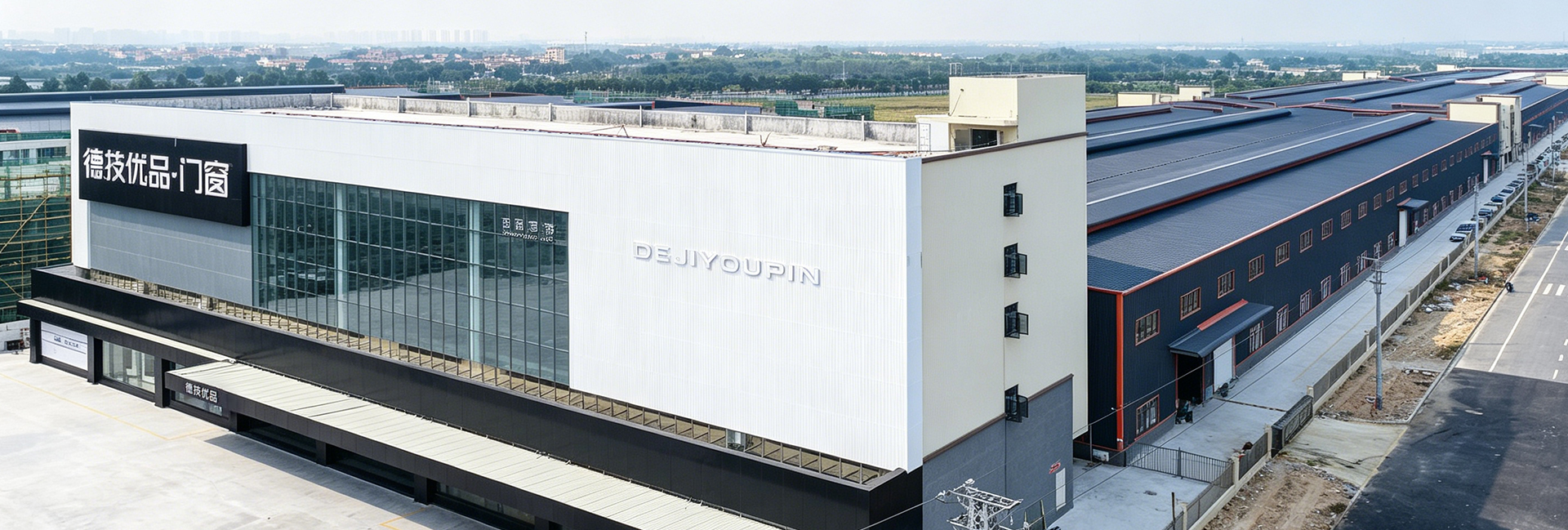
Guangdong Derki Doors & Windows Technology Co., Ltd.
A premier Chinese manufacturing power offering factory-direct thermal break entrance doors, window systems, and architectural solutions to over 60 countries.
25+ Years of Precision Engineering Excellence
Headquartered in Foshan—China's global capital for aluminum profile manufacturing—Guangdong Derki Doors & Windows Technology Co., Ltd. operates a massive 180,000 square meter modern smart production facility staffed by over 600 skilled engineers and manufacturing technicians.
Derki delivers vertically integrated OEM/ODM manufacturing, spanning raw profile extrusions, CNC machining, automated thermal break insertion, high-density PU injection, and rigorous quality inspection. Our products hold international compliance certifications including CE, ISO 9001, AS2047 (N6 highest wind rating level), UL fire-rated standards, FCC, and RoHS.
6-Stage OEM Sourcing & Quality Control Workflow
A transparent engineering timeline ensuring absolute precision from shop drawings to jobsite installation.
Drawing Review & CAD
Send architectural elevations or schedule door schedules. Our engineers prepare free CAD shop drawings within 24 hours covering opening dimensions, swing orientation, hardware cutouts, and thermal specs.
System & Glass Config
Material selection tailored to site climate: choosing between aluminum alloy, cast armor plating, or stainless steel, paired with Low-E double or triple-pane tempered glass units.
CNC Precision Fabrication
Profiles are cut and milled on automated German 5-axis CNC machines. Thermal break PA66 strips are mechanically crimped and quality-checked for shear strength compliance.
Core PU & Surface Finish
High-density foam injection combined with electrostatic powder coating or PVDF surface treatment. Tested for salt spray, UV resistance, and impact durability.
Pre-Assembly Inspection
Every door is fully assembled in-factory to test multi-point locking mechanisms, pivot floor spring movement, gasket compression seals, and micro-dimensional tolerances.
Seaworthy Export Crating
Panels are wrapped in protective scratch-proof film, corner guard covers, and secured in fully enclosed fumigated plywood crates engineered for safe ocean transport.
Frequently Asked Sourcing Questions
Clear engineering answers for importers, general contractors, and project developers looking to source factory-direct from China.
Why are thermal break aluminum front doors preferred over solid timber or steel?
Thermal break aluminum front doors deliver the highest combination of structural longevity, energy efficiency, and security. Unlike wood, aluminum will never swell, rot, or warp under humidity changes. Unlike steel, thermal break aluminum features an insulated polyamide barrier that stops cold/heat transmission, preventing interior moisture condensation and reducing HVAC power consumption.
What certifications are required for importing entry doors to North America, Australia, and Europe?
For Australia and New Zealand, doors must comply with AS2047 and AS1288 structural wind pressure and safety glass standards (our systems achieve up to N6 cyclone rating). For Europe, CE marking under EN 14351-1 is mandatory. For North America, NFRC thermal ratings, AAMA performance specs, and UL 10C fire ratings are required for commercial and multi-family projects. Derki provides complete test submittal documentation.
Can Derki manufacture custom size pivot doors and unique surface designs?
Yes. 100% of our production is made-to-order. We specialize in oversized pivot entrance doors reaching up to 4.5 meters in height and 2.0 meters in width. Customers can select from 3D cast aluminum motifs, real timber veneers, anodized metallic patinas, or custom RAL powder coating colors paired with smart biometric hardware.
What is the typical production lead time and minimum order quantity (MOQ)?
Our standard manufacturing lead time is 25 to 35 days following final CAD drawing sign-off. As a direct factory manufacturer, we support both custom luxury villa orders (MOQ = 1 door) and high-volume commercial container shipments for real estate housing developments.
How do you protect oversized glass and door panels during ocean freight?
All finished units are sealed with UV-resistant peelable protective film, wrapped in heavy EPE foam, fitted with reinforced plastic corner protectors, and packed inside heavy-duty IPPC-certified fumigated plywood crates with internal foam cushioning to ensure zero transit damage.
Ready to Request Factory Direct Quotations & CAD Drawings?
Connect directly with our Foshan engineering team. Submit your door schedules, project blueprints, or architectural specifications today for instant technical guidance.