High-Performance Low E Glass Entrance Door Systems
Explore our precision-engineered exterior front entry doors designed for residential luxury villas, high-end commercial entryways, and modern architectural projects worldwide.
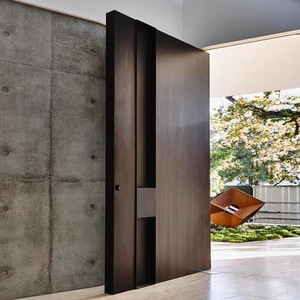 Pivot System
High Security Exterior Main Entrance Doors Customized Made Model Wooden & Aluminum Pivot Front Entry Door
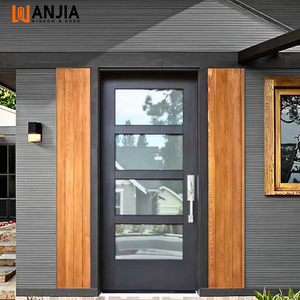 Aluminium Alloy
WANJIA Customized Casement Aluminium Alloy Glass Door Exterior Security Entrance Steel Main Doors
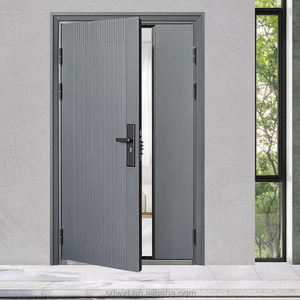 Heavy Security
Premium Steel Security Door Thick Steel Plate Waterproof Insulated Galvanized Steel Security Entry Door for House Building
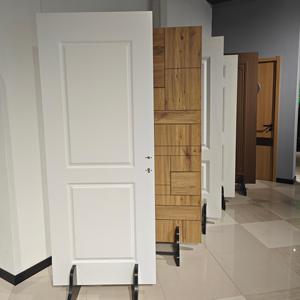 WPC Composite
Top Manufacturer Apartment Poly Internal Wood Door Hotel Bedroom Door Plastic Composite WPC Solid Wooden Room Door
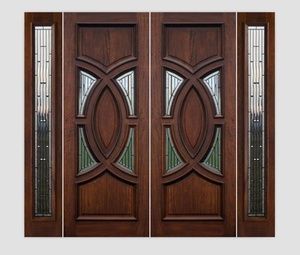 Double Entry
Luxury High Quality Double Entry Wood Doors With Side Panels
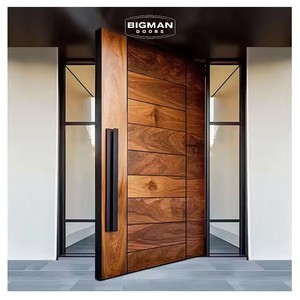 Black Walnut
American Black Walnut Residential Modern Design Solid Wood Front Entry Door Villa Main Entrance Door with Double Sidelite
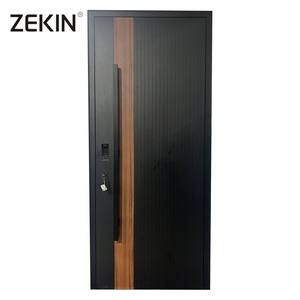 Luxury Aluminum
ZEKIN New Design Luxury Entry Aluminum Metal Entrance Door For Houses Villa Main Doors Custom Front Exterior Pivot Door
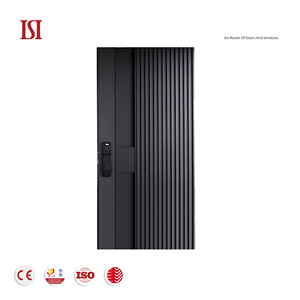 European Security
European Luxury Entrance Doors With Anti-Theft Security Modern Residential Exterior For Luxury Villas Manual Opening
The Engineering Paradigm of Low-Emissivity (Low-E) Front Entry Doors
In modern architectural fenestration, the front entry door has evolved from a simple physical security barrier into a complex, high-performance thermal envelope component. Selecting a qualified Low E glass front door supplier and exporter requires a deep technical comprehension of solar radiative control, heat transfer coefficients (U-Factor), Solar Heat Gain Coefficients (SHGC), and structural wind-load engineering.
Low-Emissivity glass features microscopically thin, transparent metallic oxide coatings (typically silver nanofilms applied via Magnetron Sputtered Vacuum Deposition - MSVD) that selectively reflect long-wave infrared thermal radiation while permitting high visible light transmittance (VLT). When integrated into double or triple-glazed Insulated Glass Units (IGUs) sealed within thermally broken aluminum, cast aluminum, or steel frames, Low-E entry doors significantly mitigate indoor thermal loss during winter and block radiant solar heat during summer.
Soft-Coat MSVD Sputtering
Off-line vacuum sputtering applies multi-layer silver and protective dielectric films. Positioned on Surface #2 or #3 inside sealed IGUs, soft-coat systems deliver optimal SHGC tuning for varied climate zones.
Polyamide Thermal Barriers
Precision-extruded PA66 GF25 (25% glass fiber reinforced polyamide) thermal break strips structurally isolate outer and inner metallic door profiles, preventing thermal bridging and surface dew condensation.
Inert Gas Argon/Krypton Infill
Filling the 12mm–18mm glass cavity with 90%+ Argon or Krypton gas reduces conductive and convective gas heat transfer inside the IGU by over 65% compared to ambient air.
Low E Glass Glazing Matrix for B2B Procurement
When evaluating international door exporters, procurement officers and architects must cross-examine glazing configurations against energy code targets (IECC, Title 24, European NZEB, and Australian NCC).
| Glazing System | U-Factor (W/m²K) | SHGC Range | VLT (%) | Argon Infill (%) | Primary Climate Suitability |
|---|---|---|---|---|---|
| Single-Pass Hard-Coat Low-E (Double Glazed) | 1.8 – 2.1 | 0.55 – 0.65 | 72% | Air / 80% Argon | Mild / Heating-Dominated Zones |
| Double-Silver Soft-Coat Low-E (Double Glazed) | 1.2 – 1.4 | 0.30 – 0.40 | 65% | 90% Argon | Universal / Mixed Solar Climates |
| Triple-Silver Soft-Coat Low-E (Triple Glazed) | 0.7 – 0.9 | 0.20 – 0.28 | 58% | 95% Argon / Krypton | Extreme Heat / Passive House Projects |
| Laminated Impact Low-E (SGP Interlayer) | 1.1 – 1.3 | 0.25 – 0.35 | 60% | 90% Argon | Coastal Hurricane / High-Security Sites |
Global Procurement & R&D Trends in Low-E Front Entrance Systems
The global architectural entrance door market is undergoing rapid technological convergence driven by stringent carbon neutrality mandates, smart home integration, and extreme weather resilience demands.
1. Ultra-Large Format Low-E Pivot Doors
Architectural demand for oversized entrance portals (exceeding 3.5 meters in height and 2.0 meters in width) has surged. Leading manufacturers are combining heavy-duty hydraulic floor pivots (supporting loads up to 500kg) with structural Low-E laminated IGUs to deliver seamless transparency without sacrificing thermal integrity or operating ergonomics.
2. Electrochromic & Switchable Smart Low-E Glass
Next-generation front entry doors incorporate Polymer Dispersed Liquid Crystal (PDLC) or Electrochromic layers sandwiched alongside Low-E coatings. This allows occupants to transition sidelites and door glazing from transparent to opaque instantly via smart automation, optimizing both privacy and dynamic solar heat control.
3. Warm-Edge Spacer & TPS Sealing Evolution
Traditional aluminum spacer bars in double glazing create perimeter thermal bridges. Future-focused exporters are standardizing Thermoplastic Spacers (TPS) and stainless steel-composite warm-edge bars, lowering perimeter U-values ($U_\psi$) by up to 12% and significantly mitigating edge condensation risks.
4. Structural Safety & SGP Hurricane Lamination
To meet strict North American coastal codes (Miami-Dade NOA compliance) and Australian cyclone ratings (AS2047 N6 pressure up to 4500 Pa), Low-E entrance glass is increasingly laminated with SentryGlas® (SGP) ionoplast interlayers. SGP provides 5 times the tear strength and 100 times the stiffness of conventional PVB, ensuring post-breakage structural defense.
Enterprise Superiority: Why Leading Global Importers Partner with DERKI
As a premier vertically integrated entrance door manufacturer based in Foshan, Guangdong—China's world-renowned aluminum and door fabrication hub—Guangdong Derki Doors & Windows Technology Co., Ltd. sets the benchmark for international engineering compliance and production scale.
Full Structural Customization & CAD Engineering
Our dedicated in-house structural engineering department provides free, full-scale CAD shop drawings, BIM models, and structural calculation reports prior to production, ensuring seamless alignment with project door schedules and site rough openings.
International Certification Matrix
Derki Low-E entrance door systems hold comprehensive global compliance credentials, including European CE Marking, ISO 9001 Quality Management System, Australian AS2047 N6 Wind Pressure Certification, and North American UL Fire-Rated testing.
Heavy-Duty Export Crating & Logistics
All Low-E entrance glass panels and framing systems are protected with anti-scratch protective film, corner impact guards, vacuum desiccant packaging, and fully enclosed reinforced export plywood crating to guarantee 0% transit defect rates.
Frequently Asked Questions for Low-E Glass Front Door Buyers
Key technical and commercial answers tailored for architectural importers, general contractors, developers, and door wholesalers.