Thermal Break & High-Security Entry Door Series
Engineered in Foshan, China. Fully customized aluminum alloy, cast aluminum, steel pivot, and security entry doors compliant with international building codes.
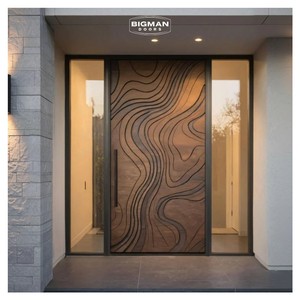
American Residential Modern Main Entrance 3D Carved Door
Get a Quote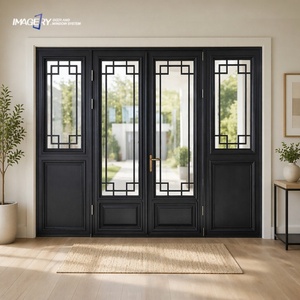
Aluminum Double Casement Antique Glass Door with Built-in Grilles
Get a Quote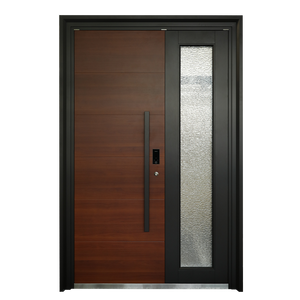
Waterproof Aluminum Security French Exterior Entry Door
Get a Quote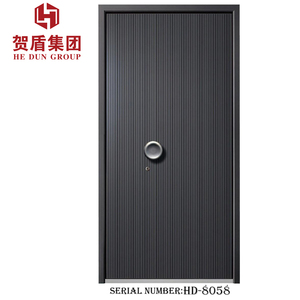
Cast Aluminum Embossed Relief Security Entrance Door
Get a Quote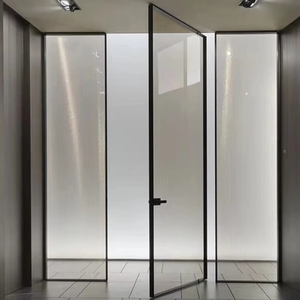
Modern Slim Frame Thermal Break Exterior Steel Pivot Door
Get a Quote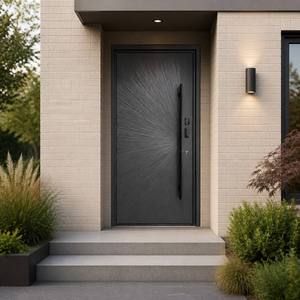
3D Face Recognition Smart Lock Cast Aluminum Entry Door
Get a Quote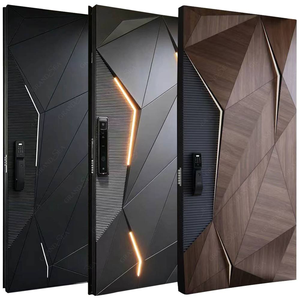
Customized Villa Aluminum Alloy Security Pivot Swing Door
Get a Quote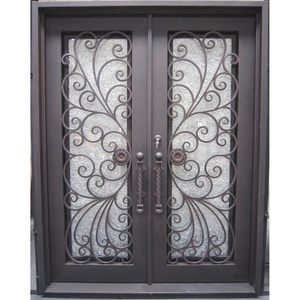
Luxury Double Entry Ornamental Wrought Iron Entrance Door
Get a QuoteGuangdong Derki Doors & Windows Technology Co., Ltd.
Established in the 1990s in Foshan—China’s premier aluminum manufacturing cluster—DERKI operates as a vertically integrated engineering manufacturer specializing in thermal break aluminum entry doors, cast aluminum entrance gates, and high-performance architectural systems.
As global architectural specifications evolve toward extreme energy efficiency and robust structural security, Guangdong Derki Doors & Windows Technology Co., Ltd. has set the industry benchmark for Chinese door exporters. Serving commercial developers, luxury villa builders, and B2B building material distributors across North America, Europe, Australia, and the Middle East, DERKI combines advanced CNC automated machining with precision hand-craftsmanship.
The Engineering Behind Thermal Break Aluminum Entrance Systems
Understanding structural thermal barriers, PA66 polyamide insulation, alloy chemistry, and acoustic attenuation metrics for global B2B procurement.
1. Anatomy of PA66 GF25 Polyamide Thermal Barriers
Standard aluminum alloys possess high thermal conductivity ($K \approx 200 \text{ W/m}\cdot\text{K}$), making uninsulated aluminum doors a thermal bridge that leads to severe heat loss in winter, heat gain in summer, and interior surface condensation. High-end thermal break aluminum entry doors replace continuous metal paths with reinforced thermal struts made of PA66 GF25 (Polyamide 66 reinforced with 25% glass fiber).
PA66 GF25 thermal strips exhibit a thermal conductivity of only $0.3 \text{ W/m}\cdot\text{K}$—over 500 times lower than raw aluminum. The glass fiber reinforcement matches the linear coefficient of thermal expansion ($\approx 2.3 \times 10^{-5}/\text{K}$) of aluminum extrusions (6063-T6), preventing shear stress failure, seal degradation, or structural delamination during extreme temperature swings between $-30^\circ\text{C}$ and $+80^\circ\text{C}$.
6063-T6 Extrusion Alloy
Architectural-grade aluminum profile with high tensile strength ($\ge 205 \text{ MPa}$) and yield strength ($\ge 170 \text{ MPa}$), engineered for high-wind loads and large-format entrance spans up to 4 meters high.
Multi-Chamber Structure
Internal cavities are packed with high-density polyisocyanurate (PIR) or aerogel insulation foam, driving overall frame thermal transmittance down to $U_f \le 1.1 \text{ W/m}^2\cdot\text{K}$.
Continuous EPDM Triple Seals
Automotive-grade Ethylene Propylene Diene Monomer (EPDM) gaskets maintain elastic memory, guaranteeing Class 4 air tightness and 1000 Pa water penetration resistance.
2. Surface Finishing & Corrosion Defense in Extreme Climates
Entry doors exported to coastal zones (e.g., Australia, Florida, Gulf Region) face severe salt fog exposure and UV degradation. DERKI applies advanced multi-stage surface technologies:
- PVDF Fluorocarbon Coatings: Polyvinylidene Fluoride 3-coat spraying ($\ge 40\mu\text{m}$) compliant with AAMA 2605 specifications, enduring 4,000+ hours of accelerated salt spray testing without chalking or blistering.
- Cast Aluminum Relief Plating: 8mm to 20mm thick solid cast aluminum panels that eliminate rusting risks inherent in traditional steel doors while presenting 3D architectural relief carvings.
- Micro-Arc Anodizing & Italian Thermal Transfer Wood Grain: Offering authentic architectural aesthetics with scratch resistance reaching Pencil Hardness $\ge 3\text{H}$.
Material Comparison for Architectural Entrance Systems
Comparative analysis to guide architects, contractors, and B2B importers during project submittals.
| Performance Criteria | Thermal Break Aluminum | Cast Aluminum Security | Stainless Steel Entry | Solid Wood / Timber |
|---|---|---|---|---|
| Thermal Insulation ($U$-Value) | 0.8 - 1.4 W/m²K (Superior) | 1.2 - 1.8 W/m²K (High) | 2.2 - 3.0 W/m²K (Moderate) | 1.5 - 2.0 W/m²K (Good) |
| Acoustic Isolation (STC / $R_w$) | 40 - 45 dB | 42 - 48 dB | 35 - 40 dB | 32 - 38 dB |
| Corrosion & Moisture Resistance | Immune / Lifetime | Immune / Lifetime | High (316 Grade required) | Prone to warping/rot |
| Forced Entry / Security Rating | Class RC2 / RC3 | Class RC3 / RC4 | Class RC3 / RC4 | Class RC1 / RC2 |
| Design & Format Flexibility | Oversized Pivots / Slim Frames | 3D Custom Reliefs | Industrial Modern | Traditional Carved |
| Maintenance Cycle | Zero Maintenance | Zero Maintenance | Periodic Polishing | Sealing every 2 years |
Future Sourcing & Technology Trends in Aluminum Entry Doors
Key architectural trends reshaping global entrance door procurement over the next five years.
1. Smart Biometric & Invisible Access Systems
Commercial and luxury residential buyers are shifting away from traditional mechanical keys. 2026+ designs integrate 3D Structured Light Face Recognition, palm vein scanners, and invisible electromechanical multi-point locks embedded within the aluminum profile stiles. Systems support integration with KNX/Crestron home automation.
2. Ultra-Large Format Thermal Pivot Systems
Architectural demand for dramatic building entrances has accelerated the adoption of oversized pivot doors reaching widths of up to 2.5m and heights of 5.0m. Advanced self-closing hydraulic floor pivots with adjustable braking dampening absorb door leaf weights exceeding 500kg while keeping thermal barriers intact.
3. Zero-Threshold Barrier-Free Thermal Drains
Universal design standards require flush entrance thresholds for accessibility. Future thermal break doors feature concealed magnetic drop-down bottom seals and integrated subterranean linear drainage tracks that maintain air/water tightness without creating physical trip hazards.
4. Passivhaus & Net-Zero Carbon Compliance
As national energy codes (such as EU EPBD and US Title 24) tighten, entrance assemblies must meet stringent air leakage limits ($V_{50} \le 0.6 \text{ h}^{-1}$). Quadruple-glazed units with warm-edge composite spacers and low-carbon recycled aluminum billets (certified green aluminum) are becoming standard RFP requirements.
Certified Engineering Standards for Global Code Approval
DERKI products are independently tested and certified, giving importers and contractors full confidence during local site inspections.
Australian AS2047 & AS1170 (N6 Rating)
Tested for severe cyclone conditions with ultimate wind pressure resistance exceeding 4500 Pa, water penetration resistance at 600 Pa, and air infiltration compliance under AS2047.
European Union CE (EN 14351-1)
Full Declaration of Performance (DoP) covering mechanical strength, dangerous substances safety, acoustic isolation, and energy transmittance across all member states.
North American UL 10C & NFRC
Fire-rated entry door assemblies holding UL 20/60/90-minute fire resistance ratings along with NFRC thermal performance ratings ($U$-factor and Solar Heat Gain Coefficient - SHGC).
From Architectural CAD to On-Site Installation Support
Our standardized project management workflow guarantees zero errors in sizing, finishes, or hardware coordination.
Elevation Review & CAD Shop Drawings
Submit architectural schedules. Our engineers issue detailed 2D/3D CAD shop drawings within 24 hours covering rough openings, swing directions, anchoring details, and glazing specs for sign-off.
Thermal & Security Customization
Select profile wall thickness (2.0mm - 3.0mm), thermal strip depth (24mm - 34mm), surface coatings (PVDF/Powder/Anodized), and lock hardware (German Hoppe/KFV or Smart Biometric).
Precision CNC Manufacturing
Profiles undergo automated corner crimping, laser welding, and dual-component polyurethane corner injection to ensure structural squareness and joint sealing.
Factory Pre-Assembly & QC Mock-Up
Every door leaf is pre-hung in its master frame inside our Foshan workshop to test lock pin alignment, hinge clearance, and weather-seal compression before packing.
Export Protection & Logistics
Doors are wrapped in PE protective film, fitted with heavy-duty corner guards, and enclosed in fumigated solid plywood crates designed for LCL/FCL ocean freight handling.
Technical Guidance & Remote Support
Our English-speaking engineering team provides remote installation guidance, hardware troubleshooting, and maintenance manuals matched to your local time zone.
Frequently Asked Questions by Global Importers
Direct technical answers addressing common procurement questions regarding Chinese door manufacturing and export logistics.
Why choose thermal break aluminum over standard non-thermal aluminum entry doors?
Non-thermal aluminum doors conduct heat rapidly, resulting in high energy bills and interior moisture condensation that damages drywall and flooring. Thermal break aluminum entry doors incorporate a PA66 polyamide barrier between inner and outer aluminum frames, reducing heat transfer by up to 70%. This improves interior comfort, meets modern building energy codes (such as IECC and Title 24), and eliminates frame sweating in cold or hot climates.
Can DERKI engineer doors to match specific wind load and hurricane requirements?
Yes. DERKI entry doors can be structural engineered to meet high-velocity hurricane zone (HVHZ) requirements and Australian AS2047 N6 wind ratings. We utilize heavy-wall 6063-T6 aluminum extrusions (up to 3.0mm thickness), multi-point stainless steel locking pins, laminated impact glass (SentryGlas / PVB interlayers), and corner-reinforced structural bracing capable of resisting pressures up to 5000 Pa.
What is the typical production lead time and sample policy for B2B orders?
For custom entry door orders, standard factory production takes 25 to 35 calendar days following CAD drawing approval. For large development projects requiring physical samples or mock-ups, sample units can be fabricated in 15 to 20 days. We also offer full material sample kits containing powder coating swatches, aluminum profile cross-sections, and gasket samples for client presentation.
How do you ensure smart electronic locks operate reliably across different international voltage and climate conditions?
Our smart entry doors integrate industrial-grade electronic locks certified to FCC, CE, and RoHS standards. Locks feature IP65 weatherproofing, operating temperature tolerances from $-25^\circ\text{C}$ to $+65^\circ\text{C}$, and dual power redundancy (internal lithium battery with external micro-USB / Type-C emergency power terminal and mechanical key override). We support major international lock protocols including Tuya, TT Lock, Zigbee, and Z-Wave.
What packaging methods are used to prevent shipping damage during ocean transport?
We use a multi-layer export protection system: First, glass surfaces and metal finishes are covered with 0.08mm anti-scratch protective film. Second, door edges are protected with high-density EPE foam corner armor. Third, the entire assembly is shrink-wrapped with moisture-proof plastic film. Finally, units are packed into fully enclosed, fumigated ISPM-15 plywood crates equipped with internal timber ribbing and base pallet runners for forklift handling.
Can you manufacture oversized custom pivot doors with zero-step threshold drainage?
Absoutely. DERKI specializes in custom large-format pivot entrance doors up to 3000mm in width and 5000mm in height. Our technical team supplies integrated subterranean stainless steel drainage channels combined with magnetic drop-down weather seals, delivering a flat, barrier-free zero-threshold transition while preventing water ingress during heavy downpours.
Ready to Upgrade Your Architectural Entry Door Projects?
Partner directly with Foshan’s leading thermal break aluminum door manufacturer. Send us your door schedule or architectural drawings for free engineering review, CAD shop drawings, and competitive direct factory pricing.
Get a Quote